

Termites are among the most destructive pests that can silently damage homes, apartments, offices, villas, warehouses, and commercial buildings. Unlike many household pests, termites often remain hidden for months or even years while continuously feeding on wooden structures, furniture, door frames, flooring, and other cellulose-based materials. By the time visible signs appear, the damage may already be extensive and expensive to repair.
A professional termite inspection is the most effective way to identify termite activity before it turns into a major structural problem. Whether you’re purchasing a new property, living in an older home, managing a commercial building, or simply want peace of mind, regular termite inspections help detect hidden infestations early and reduce the risk of costly repairs.
In this comprehensive guide, you’ll learn everything you need to know about termite inspection, including how inspections are performed, the warning signs of termite activity, common termite hiding places, the importance of regular inspections, and practical tips to keep your property protected throughout the year.
What Is a Termite Inspection?
A termite inspection is a systematic evaluation of a property’s interior, exterior, and surrounding areas to identify evidence of termite activity, termite damage, moisture issues, and conditions that may encourage future infestations. The inspection is designed to locate termites even when they are hidden behind walls, beneath flooring, inside wooden structures, or underground.
Unlike a quick visual check by a homeowner, a professional inspection follows a structured process that focuses on high-risk areas where termites are most likely to enter, nest, and spread.
During a termite inspection, trained professionals carefully assess:
- Wooden furniture and fixtures
- Door and window frames
- Wooden flooring
- Roof timber
- Staircases
- False ceilings
- Kitchen cabinets
- Wardrobes
- Wall panels
- Electrical conduits
- Basement areas
- Foundation walls
- Garden landscaping
- Tree stumps
- Exterior wooden structures
The objective is not only to determine whether termites are present but also to identify conditions that make the property vulnerable to future termite infestations.
Why Is Termite Inspection So Important?
One of the biggest challenges with termites is that they rarely remain visible. Unlike ants or cockroaches, termites work quietly from inside wood or beneath the ground. Homeowners often discover an infestation only after noticing hollow wood, damaged furniture, loose flooring, or weakened structural components.
A timely termite inspection service helps detect problems before extensive damage occurs.
Some key benefits include:
Early Detection
Professional inspections can identify termite activity long before visible damage appears.
Lower Repair Costs
Finding termites early usually means less damage, helping property owners avoid expensive structural repairs.
Improved Property Protection
Routine inspections help safeguard homes, offices, apartments, villas, hotels, schools, hospitals, warehouses, and industrial buildings from hidden infestations.
Better Property Value
A termite-free property is more attractive to buyers and tenants, making regular inspections especially valuable before selling or renting.
Peace of Mind
Knowing your property has been professionally inspected allows you to address issues before they become major concerns.
Why Are Termites Called “Silent Destroyers”?
The term “silent destroyers” is widely used because termites can remain active inside a structure without obvious warning signs.
Instead of feeding on exposed wood, termites typically attack from:
- Inside wooden beams
- Beneath flooring
- Behind walls
- Inside furniture
- Underground
- Inside door frames
- Roof structures
Because most of their activity is hidden, a building may appear perfectly normal while significant internal damage is occurring.
This is why scheduling a professional termite inspection is one of the smartest preventive measures for any property owner.
Common Signs That You Need a Termite Inspection
Many people assume they will easily notice termites. In reality, the insects themselves are often hidden, and the first clues are subtle.
If you observe any of the following, it’s time to arrange a termite inspection as soon as possible:
1. Hollow-Sounding Wood
Tap wooden furniture, doors, or beams. If the wood sounds hollow instead of solid, termites may have consumed the interior while leaving the outer surface intact.
2. Mud Tubes Along Walls or Foundations
Subterranean termites build narrow mud tubes to travel safely between their colony and food sources while maintaining the moisture they need to survive.
These tubes may appear on:
- Exterior walls
- Foundation walls
- Basement areas
- Pillars
- Utility pipes
- Garage walls
Even inactive mud tubes indicate previous termite activity and should be professionally evaluated.
3. Damaged Wooden Furniture
Furniture may develop:
- Small holes
- Weak corners
- Crumbling wood
- Soft surfaces
- Internal tunnels
These signs often indicate termites feeding inside the wood.
4. Tight-Fitting Doors and Windows
As termites damage wooden frames, slight distortion can occur, making doors or windows difficult to open or close smoothly.
Although swelling from moisture can produce similar symptoms, termite inspection helps identify the true cause.
5. Bubbling or Uneven Paint
Walls affected by termite activity may show:
- Paint bubbles
- Blistering
- Peeling finishes
- Uneven wall surfaces
These signs can resemble moisture damage, which is why professional evaluation is recommended.
6. Sagging Wooden Flooring
Termites feeding beneath wooden flooring can weaken support structures, causing sections of the floor to become uneven or unstable.
7. Fine Dust or Wood Particles
Accumulations of tiny wood particles near furniture, skirting boards, or wooden fixtures may indicate insect activity. A detailed inspection helps determine whether termites are responsible.
Properties That Should Have Regular Termite Inspections
Many people believe termites only affect old houses. In reality, termites can infest both new and older buildings whenever suitable conditions exist.
Routine termite inspection services are recommended for:
- Independent houses
- Apartments
- Villas
- Residential societies
- Office buildings
- Commercial complexes
- Retail stores
- Restaurants
- Hotels
- Schools
- Hospitals
- Warehouses
- Factories
- Farmhouses
- Resorts
Properties with gardens, wooden interiors, moisture issues, or nearby construction activity often face a higher risk and may benefit from more frequent inspections.
When Should You Schedule a Termite Inspection?
There is no single “perfect” time, but certain situations make a termite inspection especially important.
Consider arranging an inspection:
- Before purchasing a property
- Before renovating a home
- Before installing new wooden furniture
- After discovering unexplained wood damage
- If neighbours report termite infestations
- After heavy rains or prolonged moisture exposure
- Before beginning pest management programs
- As part of annual preventive maintenance
Regular inspections help identify issues early, even when no obvious signs are visible.
What Causes Termite Infestations?
Understanding what attracts termites can help property owners reduce the risk of future problems.
Some of the most common contributing factors include:
Excess Moisture
Leaking pipes, damp walls, poor drainage, and water accumulation create favourable conditions for many termite species.
Direct Wood-to-Soil Contact
Wooden structures that touch the ground provide termites with an easy pathway into a building.
Stored Wooden Materials
Unused timber, cardboard, paper products, and firewood stored close to buildings can attract termite activity.
Cracks in Foundations
Small gaps in foundations and walls can serve as entry points for subterranean termites searching for food sources.
Dense Landscaping
Tree stumps, mulch, wooden fences, and dense vegetation near structures can increase the likelihood of termite activity around the property.
Types of Termites Found in India
Not all termites behave the same way. Different species have different nesting habits, feeding patterns, and preferred environments. Identifying the type of termite helps professionals recommend the most suitable treatment plan after the termite inspection is complete.
1. Subterranean Termites
Subterranean termites are the most common and destructive termites found in India. They live underground in large colonies and travel through mud tubes to reach wooden structures.
These termites are commonly found in:
- Residential homes
- Apartments
- Villas
- Office buildings
- Warehouses
- Schools
- Hospitals
- Commercial complexes
Common Signs
- Mud tubes on walls and foundations
- Hollow wooden structures
- Damaged door frames
- Weak flooring
- Cracked skirting boards
Because they remain hidden underground, a professional termite inspection is often the only reliable way to detect them before significant damage occurs.
2. Drywood Termites
Unlike subterranean termites, drywood termites do not require soil contact. They live directly inside dry wooden furniture and timber.
They are commonly found in:
- Wooden beds
- Dining tables
- Cabinets
- Wooden partitions
- Antique furniture
- Wooden ceilings
- Wooden doors
- Window frames
Since these termites live entirely within the wood they consume, infestations may go unnoticed for long periods without a detailed termite inspection.
3. Dampwood Termites
Dampwood termites prefer wood with high moisture content. They are less common but can become a problem in buildings with persistent dampness or water leakage.
Areas at risk include:
- Bathrooms
- Kitchens
- Basements
- Water-damaged ceilings
- Leaking roofs
- Moist wooden flooring
Fixing moisture issues is an important part of preventing future infestations.
How Does a Professional Termite Inspection Work?
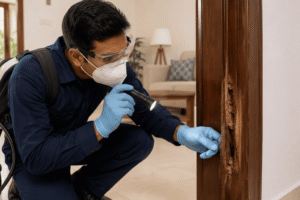
Many homeowners imagine that termite inspections involve only a quick visual look around the property. In reality, a professional inspection follows a systematic process designed to detect hidden termite activity and identify conditions that may lead to future infestations.
A thorough termite inspection service typically includes the following steps.
Step 1: Property Assessment
The inspector begins by gathering basic information about the property, including:
- Building age
- Previous termite history
- Renovation work
- Moisture issues
- Wooden structures
- Nearby gardens or trees
Understanding the property’s history helps identify areas that require closer examination.
Step 2: Exterior Inspection
The outside of the property is inspected first because termites usually enter from the surrounding soil.
Professionals carefully examine:
- Foundation walls
- Boundary walls
- Garden areas
- Tree stumps
- Wooden fences
- Decking
- Utility pipes
- Drainage systems
- Expansion joints
- Exterior wooden structures
Special attention is given to places where wood is in direct contact with the ground.
Step 3: Interior Inspection
Next, every accessible room is inspected for signs of termite activity.
Common inspection points include:
- Living rooms
- Bedrooms
- Kitchens
- Bathrooms
- Store rooms
- Utility areas
- Balconies
- Staircases
Inspectors examine both visible and concealed wooden components wherever access is possible.
Step 4: Furniture Inspection
Furniture often becomes one of the earliest targets for termites.
During the inspection, professionals evaluate:
- Beds
- Wardrobes
- Dining tables
- Wooden sofas
- Cabinets
- Office desks
- Shelves
- Study tables
- Wooden partitions
They check for:
- Hollow sounds
- Surface damage
- Tiny holes
- Weak joints
- Internal galleries
- Wood deterioration
Step 5: Structural Timber Inspection
Structural timber receives special attention because termite damage can affect the stability of the building over time.
Inspection areas include:
- Roof beams
- Ceiling timber
- Support columns
- Door frames
- Window frames
- Wooden flooring
- Staircases
- False ceilings
Professionals use specialized tools to detect hidden termite activity without causing unnecessary damage to the structure.
Step 6: Moisture Inspection
Moisture is one of the biggest factors that encourage termite activity.
Inspectors look for:
- Plumbing leaks
- Roof leakage
- Damp walls
- Wet flooring
- Water seepage
- Poor drainage
- Condensation
Addressing these moisture problems can significantly reduce the likelihood of future termite infestations.
Areas Most Frequently Inspected
A complete termite inspection covers much more than just visible wooden furniture.
Professionals commonly inspect:
Inside the Property
- Wooden doors
- Window frames
- Wooden flooring
- Wall panels
- Wardrobes
- Kitchen cabinets
- False ceilings
- Electrical cable entry points
- Storage rooms
- Utility rooms
Outside the Property
- Foundations
- Boundary walls
- Gardens
- Tree roots
- Wooden fencing
- Outdoor sheds
- Drainage channels
- Decking
- Wooden pergolas
Each of these areas may provide food, moisture, or shelter for termites.
Advanced Tools Used During a Professional Termite Inspection
Modern termite inspections may involve specialized equipment to help detect hidden infestations more accurately.
Depending on the property and suspected activity, professionals may use:
- Moisture meters
- Inspection probes
- High-intensity flashlights
- Telescopic inspection mirrors
- Sounding tools for hollow timber
- Borescopes for difficult-to-access spaces
These tools allow inspectors to evaluate concealed areas with minimal disturbance while improving the accuracy of the inspection.
Residential vs Commercial Termite Inspection
Although the inspection process follows the same principles, residential and commercial properties often have different requirements.
Residential Termite Inspection
A home inspection focuses on protecting:
- Furniture
- Wooden flooring
- Interior woodwork
- Roof structures
- Kitchen cabinets
- Wardrobes
- Personal belongings
Homeowners benefit from early detection, helping avoid expensive repairs and preserving the value of their property.
Commercial Termite Inspection
Commercial inspections typically involve larger premises with more complex layouts.
These may include:
- Office buildings
- Hotels
- Restaurants
- Retail outlets
- Warehouses
- Educational institutions
- Healthcare facilities
- Industrial units
Businesses often schedule periodic inspections to protect infrastructure, maintain operational continuity, and reduce the risk of structural damage.
Common Mistakes Property Owners Make Before a Termite Inspection
Many infestations become more severe because early warning signs are overlooked or misunderstood.
Avoid these common mistakes:
Ignoring Small Mud Tubes
Even a single mud tube can indicate active or previous termite movement. It should always be assessed by a professional.
Delaying the Inspection
Waiting until major damage becomes visible can lead to significantly higher repair costs. Early inspections help detect issues before they spread.
Assuming New Buildings Are Safe
Newly constructed homes are not immune to termites. Soil conditions, nearby vegetation, and moisture can still attract colonies.
Covering Damaged Wood
Painting over damaged timber or replacing small sections without identifying the underlying cause may allow termites to continue spreading unnoticed.
Skipping Annual Preventive Checks
Many infestations are discovered during routine inspections before any visible damage appears. Preventive inspections are generally more cost-effective than dealing with extensive repairs later.
How Long Does a Termite Inspection Take?
The duration depends on several factors, including:
- Property size
- Number of rooms
- Accessibility
- Amount of wooden structures
- Signs of infestation
- Complexity of the building
A small apartment may require less time than a large villa, office, or warehouse. If evidence of termite activity is found, inspectors may spend additional time documenting affected areas and recommending appropriate next steps.
What Happens After a Termite Inspection?
Once the termite inspection is completed, the inspector reviews the findings and explains whether there is evidence of active termites, previous termite activity, termite damage, or conditions that may increase the risk of future infestations.
A professional inspection is not just about confirming the presence of termites—it also helps property owners understand the overall health of their property and what preventive measures should be taken.
Depending on the inspection results, the outcome generally falls into one of the following categories:
No Evidence of Termites
If no signs of termite activity are found, the property owner is advised on preventive measures to help keep the building termite-free. This may include reducing moisture, improving ventilation, removing wood-to-soil contact, and scheduling periodic inspections.
Active Termite Infestation
If active termites are detected, the inspector identifies the affected areas and recommends an appropriate treatment plan based on the type of infestation, the extent of damage, and the construction of the property.
Previous Termite Damage
Sometimes, inspections reveal old termite damage but no active infestation. In such cases, professionals assess whether the damaged wood needs repair or replacement and recommend regular monitoring to ensure termites do not return.
Understanding a Termite Inspection Report
After a professional termite inspection, many companies provide a detailed inspection report. This report serves as a valuable record of the property’s condition and can be especially useful when buying, selling, or maintaining a property.
A typical termite inspection report may include:
- Property details
- Date of inspection
- Areas inspected
- Areas that were inaccessible
- Signs of termite activity
- Visible termite damage
- Moisture-related concerns
- Risk factors identified
- Photographs (if applicable)
- Recommendations for treatment or preventive measures
Keeping inspection reports on file allows homeowners to track changes over time and demonstrate proper property maintenance.
What Factors Affect the Cost of a Termite Inspection?
One of the most common questions homeowners ask is about the termite inspection cost. While prices can vary between service providers, several factors generally influence the cost of an inspection.
These include:
Property Size
Larger properties require more time to inspect thoroughly, which may increase the inspection cost.
Type of Property
Inspection requirements differ for:
- Apartments
- Independent houses
- Villas
- Offices
- Hotels
- Warehouses
- Commercial buildings
Commercial properties often require a more detailed assessment due to their size and complexity.
Accessibility
If certain areas are difficult to access—such as crawl spaces, false ceilings, basements, or roof voids—the inspection may take longer.
Severity of Suspected Infestation
Properties showing multiple signs of termite activity often require a more comprehensive evaluation.
Previous Termite History
Buildings with a history of termite infestations may require additional attention during the inspection.
Rather than choosing a service based solely on price, property owners should look for experienced professionals who perform thorough inspections and provide clear recommendations.
Pre-Construction vs Post-Construction Termite Inspection
Many people associate termite inspections only with existing buildings, but inspections are equally valuable during new construction.
Pre-Construction Termite Inspection
A pre-construction termite inspection is carried out before or during the early stages of building construction. The purpose is to evaluate site conditions that could increase the risk of termite infestation in the future.
During this stage, professionals inspect:
- Soil conditions
- Foundation areas
- Surrounding vegetation
- Wood storage on-site
- Drainage and moisture conditions
Early inspection allows preventive measures to be planned before the structure is completed.
Benefits of Pre-Construction Inspection
- Reduces future termite risks
- Protects structural foundations
- Supports long-term property durability
- Helps identify conditions that attract termites
Post-Construction Termite Inspection
A post-construction termite inspection is performed after the building has been completed and occupied.
The focus shifts to identifying:
- Active termite infestations
- Hidden termite damage
- Moisture-related issues
- Entry points
- Structural vulnerabilities
- Conditions encouraging termite activity
Regular post-construction inspections help maintain the property and reduce the likelihood of costly repairs.
How Often Should You Schedule a Termite Inspection?
There is no universal schedule that suits every property. The ideal inspection frequency depends on several factors, including location, property type, surrounding environment, and previous termite history.
In general, professional termite inspections are recommended:
- Annually for most residential properties
- Before purchasing a new home
- Before major renovation projects
- After prolonged water leakage or flooding
- If neighbouring properties report termite activity
- When unexplained wood damage is noticed
Properties located in warm, humid regions or surrounded by gardens and trees may benefit from more frequent inspections.
Benefits of Regular Termite Inspections
Routine termite inspections offer much more than early detection. They help property owners protect one of their most valuable investments.
1. Early Identification of Hidden Problems
Termites often remain concealed for long periods. Regular inspections help identify infestations before extensive structural damage occurs.
2. Reduced Repair Expenses
Repairing termite-damaged timber, flooring, or structural components can be expensive. Early detection often reduces the extent of repairs required.
3. Long-Term Property Protection
Whether you own a home, office, hotel, or commercial building, routine inspections contribute to the long-term preservation of the property.
4. Better Indoor Environment
Identifying moisture issues and damaged wooden structures contributes to a healthier indoor environment and supports overall building maintenance.
5. Increased Buyer Confidence
If you plan to sell your property, recent termite inspection reports can reassure potential buyers that the building has been properly maintained.
Practical Tips to Prevent Termite Infestations
While professional termite inspection services play an essential role in early detection, property owners can also take preventive steps to reduce termite risks.
Keep Wood Away from Soil
Avoid direct contact between wooden structures and the ground wherever possible.
Repair Water Leaks Promptly
Leaking pipes, roof damage, and damp walls create favourable conditions for termites.
Improve Ventilation
Well-ventilated spaces are generally less prone to excessive moisture buildup.
Store Firewood Properly
Keep firewood, timber, and cardboard away from the main building and elevated above the ground.
Remove Dead Trees and Stumps
Old tree stumps and decaying wood can become breeding sites for termites.
Inspect Wooden Furniture Regularly
Periodically check furniture for:
- Small holes
- Soft wood
- Hollow sounds
- Surface cracks
- Weak joints
Early detection can prevent a localized issue from spreading further.
Seal Foundation Cracks
Small gaps around foundations, plumbing lines, and utility entry points may provide access for subterranean termites.
Maintain Good Drainage
Ensure rainwater drains away from the building and does not collect near the foundation.
Schedule Professional Inspections
Even if no visible signs are present, periodic professional termite inspections remain one of the most effective preventive measures.
DIY Termite Inspection vs Professional Termite Inspection
Many homeowners wonder if they can inspect for termites themselves. While basic visual checks can help identify obvious warning signs, they cannot replace the expertise and thoroughness of a professional inspection.
| DIY Inspection | Professional Termite Inspection |
|---|---|
| Limited to visible areas | Covers visible and accessible hidden areas |
| May miss early infestations | Better equipped to identify subtle signs |
| No specialized inspection tools | Uses professional inspection equipment where appropriate |
| Difficult to assess structural risks | Evaluates damage, moisture, and risk factors comprehensively |
| No formal documentation | Often includes a detailed inspection report and recommendations |
A professional inspection provides greater confidence, especially when buying property, planning renovations, or protecting valuable wooden structures.