
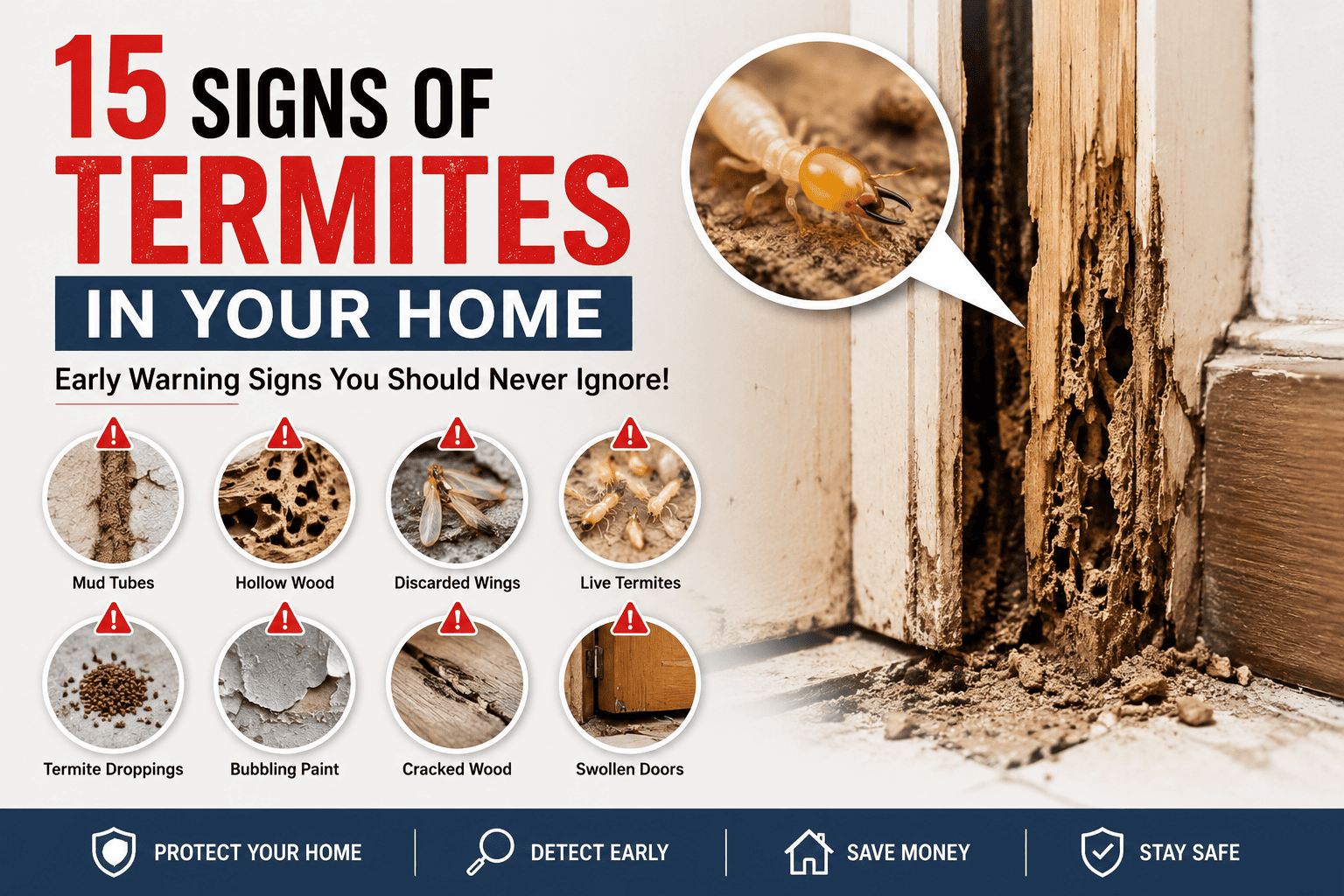
Termites are often called the “silent destroyers” because they can cause extensive structural damage long before homeowners realize they are present. Every year, thousands of homes across India suffer costly repairs due to hidden termite infestations that could have been prevented with early detection.
Unlike cockroaches or ants, termites usually remain out of sight. They quietly feed on wood, furniture, doors, window frames, plywood, paper, and other cellulose-based materials. By the time visible damage appears, the infestation may already be well established.
The good news is that termites rarely appear without leaving clues. If you know what to look for, you can identify an infestation early and take action before it becomes a major problem.
In this comprehensive guide, you’ll learn the 15 most important signs of termites in your home, understand why they occur, discover where termites hide, and know when it’s time to seek professional termite treatment.
Whether you own a home in Goa, Bengaluru, Pune, Mumbai, Hyderabad, Chennai, Delhi, Noida, or Gurgaon, recognizing the early signs of termites can help you avoid costly repairs.
What Are Termites?
Termites are small, soft-bodied insects that live in large colonies and feed primarily on cellulose, the natural component found in wood and plant materials. Although they are sometimes mistaken for ants, termites have very different behaviors and can cause far greater damage to homes and buildings.
A mature termite colony can contain thousands to even millions of termites, working continuously to find food sources. Since they remain active 24 hours a day, even a relatively small infestation can cause significant damage over time.
In India, termites are commonly found in:
- Residential homes
- Apartments
- Villas
- Wooden furniture
- Commercial buildings
- Warehouses
- Schools
- Hotels
- Offices
They are particularly active during warm and humid weather, making many regions of India vulnerable throughout the year.
Why Early Detection Matters
Many homeowners ignore the first warning signs because termite damage often develops gradually. A small crack in wood, a few discarded wings, or a swollen door may seem harmless, but these can be early indicators of a growing infestation.
Detecting termites early offers several benefits:
- Prevents expensive structural repairs
- Protects valuable wooden furniture
- Reduces the spread of termite colonies
- Saves money on restoration work
- Helps preserve property value
- Minimizes disruption to your home
The earlier you identify the signs of termites in your home, the easier it is to stop the infestation before serious damage occurs.
In rapidly growing cities like Mumbai, Goa, Bengaluru and Pune, termite infestations are common due to warm weather and increasing residential construction.
15 Early Signs of Termites in Your Home
1. Mud Tubes on Walls, Foundations or Wooden Surfaces
One of the most recognizable signs of termites in your home is the appearance of narrow mud tubes running along walls, foundations, pillars, or wooden structures.
These tubes are built by subterranean termites using soil, saliva, and tiny wood particles. They serve several important purposes:
- Protect termites from predators
- Maintain moisture
- Provide safe travel between the colony and food source
- Shield termites from sunlight
Mud tubes are usually about the width of a pencil but may vary depending on the colony size.
Where You May Find Mud Tubes
- Exterior walls
- Foundation walls
- Basement walls
- Under staircases
- Garage walls
- Around plumbing pipes
- Wooden beams
- Garden retaining walls
If you break open a fresh mud tube, you may even see live termites moving inside.
Important: Never assume that an old-looking mud tube means the infestation is gone. Termites often rebuild damaged tubes within days.
2. Hollow-Sounding Wood
Wood may appear perfectly normal from the outside while being extensively damaged inside.
Termites consume wood from the inside out, leaving behind only a thin outer surface. This makes the wood sound hollow when tapped.
Check These Areas
- Wooden doors
- Window frames
- Cabinets
- Wardrobes
- Dining tables
- Wooden flooring
- Ceiling beams
- Staircases
Try gently tapping suspicious wooden surfaces with the handle of a screwdriver or a small hammer.
Healthy wood usually produces a solid sound.
Damaged wood often produces:
- Hollow sounds
- Papery sounds
- Thin vibrations
- Weak spots
If the wood feels unusually light or breaks easily, termites may already be feeding inside.
3. Swollen or Tight-Fitting Doors and Windows
Many homeowners mistakenly blame humidity when doors or windows suddenly become difficult to open or close.
While moisture can certainly cause swelling, termite activity can produce similar symptoms.
As termites tunnel through wooden frames, moisture becomes trapped inside the damaged wood, causing expansion and distortion.
Common Symptoms
- Doors rubbing against the floor
- Windows that no longer slide properly
- Sticky wooden frames
- Uneven gaps
- Warped wood
If these problems appear without an obvious reason, inspect the surrounding wood carefully for additional termite activity.
4. Tiny Holes in Wooden Furniture
Small pin-sized holes are another warning sign that should never be ignored.
Although these holes may also be caused by wood-boring insects, termites can create tiny openings while entering or exiting wooden structures.
Inspect:
- Beds
- Sofas with wooden frames
- Dining tables
- Cupboards
- Bookshelves
- Wooden cabinets
- Office desks
Pay close attention to older furniture that has remained undisturbed for years.
If you notice multiple tiny holes accompanied by other symptoms such as hollow wood or termite droppings, professional inspection is recommended.
5. Discarded Wings Near Windows and Lights
One of the clearest signs of termites in your home is finding piles of small, transparent wings.
These wings belong to reproductive termites, often called swarmers or alates.
During the breeding season, winged termites leave their colony to establish new colonies elsewhere.
After landing, they quickly shed their wings.
You may notice discarded wings:
- Near windows
- Around doors
- On window sills
- Close to lights
- Near balconies
- Around ventilation openings
Many homeowners confuse flying termites with flying ants.
However, termite wings are:
- Equal in size
- Longer than their body
- Easily detached
- Usually found in piles
If you repeatedly find discarded wings indoors, it is a strong indication that termites are nearby.
How to Differentiate Flying Ants and Flying Termites
Many people mistake termite swarmers for flying ants, delaying proper treatment. Knowing the difference can help you respond quickly.
| Feature | Flying Termites | Flying Ants |
|---|---|---|
| Waist | Thick and straight | Narrow and pinched |
| Antennae | Straight | Bent or elbowed |
| Wings | Two pairs of equal size | Front wings longer than back wings |
| Body Color | Cream, brown or black | Usually darker |
| Behavior | Shed wings quickly | Wings remain attached longer |
Because termites often emerge after rainfall or during humid weather, seeing winged insects inside your home during these periods should prompt a closer inspection.
Why You Should Never Ignore Early Warning Signs
Many homeowners wait until they see visible damage before taking action. Unfortunately, termites work silently and continuously, often causing hidden structural damage for months or even years.
Ignoring the early signs of termites in your home can lead to:
- Severe damage to wooden furniture
- Weakening of door and window frames
- Compromised wooden flooring
- Damage to false ceilings
- Increased repair costs
- Larger termite colonies that are more difficult to eliminate
Acting early not only protects your property but can also save you significant time and expense.
6. Flying Termites Inside Your Home
Finding a few winged insects inside your home may not seem alarming at first. However, if they are flying termites, it could indicate that a termite colony is already nearby or even inside your property.
Flying termites, also known as swarmers, are reproductive termites that leave an established colony to create new ones. Their appearance is one of the most important signs of termites in your home, especially during the monsoon or humid months.
Why Do Flying Termites Appear?
Flying termites usually emerge when:
- Humidity is high
- It has recently rained
- Temperatures are warm
- The termite colony has matured
These insects are attracted to light, which is why they are often found near:
- LED lights
- Tube lights
- Ceiling lamps
- Balconies
- Windows
- Glass doors
If you notice dozens of flying termites indoors, don’t simply vacuum them up and forget about them. Their presence often means a larger hidden colony is actively feeding within or around your home.
What Should You Do?
If you find flying termites:
- Collect a few samples if possible.
- Check nearby wooden furniture and walls.
- Look for discarded wings.
- Inspect for mud tubes.
- Schedule a professional termite inspection.
Ignoring flying termites can allow new colonies to establish themselves, increasing the risk of extensive damage.
7. Tiny Wood-Colored Droppings (Termite Frass)
Another common sign of termite activity is the presence of termite droppings, also called frass.
Drywood termites push their waste out through tiny holes in the wood. These droppings often resemble:
- Fine sawdust
- Coffee powder
- Sand-like pellets
- Tiny grains of wood
Many homeowners mistake frass for ordinary dust and clean it away without investigating the source.
Where Can You Find Frass?
Look around:
- Window frames
- Wooden cupboards
- Wardrobes
- Study tables
- Bed frames
- Skirting boards
- Wooden shelves
If the pile keeps reappearing after cleaning, termites may still be active inside the wood.
Why Frass Matters
Unlike normal household dust, termite frass indicates ongoing feeding activity. It’s an early warning sign that shouldn’t be ignored.
8. Bubbling, Peeling or Blistering Paint
Walls with bubbling paint are often blamed on moisture leaks. While water damage is one possible cause, termite activity can produce similar symptoms.
As termites tunnel behind walls or wooden panels, moisture becomes trapped, causing paint to:
- Bubble
- Peel
- Crack
- Blister
- Warp
Check These Areas
- Interior walls
- Wooden wall panels
- Ceiling corners
- Window frames
- Door frames
- Wooden partitions
If bubbling paint appears alongside other termite warning signs, a detailed inspection is recommended.
9. Cracked or Damaged Wooden Flooring
Wooden flooring adds elegance to a home, but it can also become a prime target for termites.
Since termites feed from underneath, homeowners often don’t notice the damage until the floor begins to show visible problems.
Warning Signs Include
- Loose flooring
- Cracked wooden planks
- Soft spots
- Uneven surfaces
- Hollow sounds while walking
- Boards lifting at the edges
Why This Happens
Termites consume the internal cellulose of wooden flooring while leaving the surface mostly intact. Over time, the weakened structure can no longer support normal foot traffic.
If sections of your wooden floor suddenly feel unstable, termites should be considered as a possible cause.
10. Sagging or Damaged Ceilings
Many people don’t realize that termites can attack roof structures, ceiling beams, and false ceilings.
Because these areas are rarely inspected, infestations often go unnoticed until serious damage occurs.
Signs to Watch For
- Ceiling sagging
- Hairline cracks
- Loose plaster
- Soft wooden beams
- Ceiling panels separating
- Visible holes
In severe infestations, damaged ceiling components may even become unsafe.
If your home has extensive wooden roof framing, regular termite inspections are strongly recommended.
11. Damaged Skirting Boards and Wooden Trim
Skirting boards, door trims, and decorative wooden mouldings are frequent entry points for termites.
Since these components sit close to walls and floors, subterranean termites can reach them without being easily detected.
Inspect For
- Cracks
- Hollow sections
- Soft wood
- Bubbling paint
- Mud deposits
- Tiny holes
Press gently with a screwdriver. If the wood feels unusually soft or collapses easily, internal termite damage may already be present.
12. Clicking Sounds Inside Walls
This may sound surprising, but termites can actually produce faint clicking or rustling sounds.
Worker termites communicate by tapping their heads against wood, while soldier termites create vibrations to warn the colony of danger.
Although these sounds are very quiet, they may be noticeable in silent environments.
You May Hear
- Soft clicking
- Gentle tapping
- Faint rustling
- Light scratching noises
These sounds are most noticeable:
- At night
- In quiet rooms
- Near wooden walls
- Around ceiling beams
While other pests can also make noises, unexplained clicking combined with additional termite signs deserves further investigation.
Common Areas Where Termites Hide
Termites rarely stay in open spaces. Instead, they hide inside wood, walls, and soil, making them difficult to detect without careful inspection.
Check these locations regularly:
- Wooden doors
- Window frames
- Kitchen cabinets
- Wardrobes
- Bed frames
- Dining tables
- Bookshelves
- False ceilings
- Wooden flooring
- Staircases
- Roof beams
- Garden fences
- Outdoor wooden decks
- Tree stumps
- Basement storage areas
Homes with high moisture levels or untreated wood are particularly vulnerable.
Quick Home Inspection Checklist
Use this checklist every few months to catch problems early:
• Look for mud tubes along walls and foundations.
• Tap wooden furniture for hollow sounds.
• Check doors and windows for sticking or swelling.
• Inspect for discarded termite wings.
• Look for frass (tiny wood-colored pellets).
• Examine paint for bubbling or peeling.
• Walk across wooden floors to identify soft or uneven spots.
• Check ceiling corners for cracks or sagging.
• Inspect skirting boards and wooden trim.
• Watch for flying termites during the monsoon season.
Regular inspections can help identify signs of termites in your home before they develop into costly structural problems.
13. Doors and Windows That Suddenly Become Difficult to Open
If your wooden doors or windows suddenly become tight-fitting, don’t assume it’s only because of seasonal humidity.
Termites feed on the inside of wooden frames, weakening their structure. As moisture becomes trapped in the damaged wood, the frames can swell, making doors and windows difficult to open or close.
Common Warning Signs
- Doors rubbing against the floor
- Windows that won’t slide smoothly
- Uneven door alignment
- Cracked wooden frames
- Soft or hollow wood around hinges
While humidity can also cause swelling, these symptoms combined with other signs of termites in your home should never be ignored.
14. Weak or Damaged Wooden Structures
One of the most dangerous stages of a termite infestation is when structural wood begins losing its strength.
Because termites eat wood from the inside, furniture or structural components may appear perfectly normal until pressure is applied.
Areas to Inspect
- Wooden staircases
- Roof beams
- Ceiling supports
- Bed frames
- Dining tables
- Chairs
- Wooden partitions
- Balcony railings
- Wooden shelves
Warning Signs
- Wood crumbles easily
- Furniture feels unstable
- Wooden beams sag
- Surface breaks under light pressure
- Deep internal tunnels become visible
Severely damaged wooden structures can become unsafe and should be inspected immediately.
15. Seeing Live Termites
The most obvious sign is seeing live termites themselves.
Unfortunately, if you are seeing termites regularly, the infestation is usually well established.
Termites may appear:
- Inside damaged furniture
- Near mud tubes
- Under wooden flooring
- Around wall cracks
- Behind skirting boards
- Inside door frames
- Around ceiling beams
Worker termites are usually:
- Cream-colored
- Soft-bodied
- Small
- Sensitive to sunlight
Soldier termites have larger heads and strong jaws designed to protect the colony.
Finding even a few live termites indoors should be treated as a serious warning sign.
What Happens If You Ignore Termite Warning Signs?
Ignoring termites rarely makes the problem disappear. Instead, the colony continues to grow while causing hidden damage throughout your property.
Potential consequences include:
- Structural weakening of wooden components
- Damage to expensive furniture
- Costly repairs to doors and windows
- Compromised wooden flooring
- Damage to false ceilings
- Increased repair expenses
- Reduced property value
- Larger termite colonies that require more extensive treatment
Early action is almost always less expensive than repairing severe termite damage.
DIY Home Inspection Checklist
You can perform a basic inspection every few months to identify early termite activity.
Exterior Inspection
• Look for mud tubes along foundations.
• Inspect exterior walls.
• Check wooden fences and gates.
• Examine tree stumps.
• Inspect wooden decks.
• Look around plumbing entry points.
Interior Inspection
• Tap wooden furniture.
• Check wardrobes and cupboards.
• Inspect doors and window frames.
• Look behind curtains near windows.
• Examine skirting boards.
• Check false ceilings.
• Inspect wooden flooring.
• Look for discarded wings.
• Search for termite droppings.
• Watch for bubbling paint.
Remember, a DIY inspection can help identify warning signs, but it cannot always detect hidden colonies inside walls or beneath floors.
When Should You Call a Termite Professional?
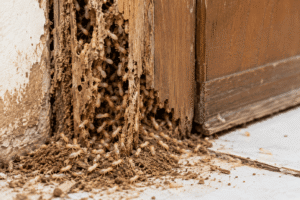
You should arrange a professional termite inspection if you notice:
- Mud tubes
- Flying termites indoors
- Discarded wings
- Hollow wood
- Bubbling paint
- Termite droppings
- Live termites
- Sagging wooden structures
- Soft wooden furniture
- Repeated termite activity
Professional technicians use specialized equipment and proven treatment methods to identify hidden infestations that homeowners may overlook.
If you notice any of these warning signs, homeowners in Mumbai, Goa, Hyderabad, Chennai, Delhi, Noida, and Gurgaon should schedule a professional termite inspection as soon as possible.
How Professional Anti-Termite Treatment Works
Professional termite treatment is designed to eliminate active colonies and reduce the risk of future infestations.
Depending on the type and extent of the infestation, treatment may include:
Inspection
A detailed assessment of:
- Interior rooms
- Wooden furniture
- Walls
- Floors
- Roof structures
- Exterior foundation
Identification
Professionals identify:
- Termite species
- Entry points
- Nesting areas
- Extent of damage
- Moisture sources
Treatment
Suitable treatment methods are selected based on:
- Property type
- Construction style
- Level of infestation
- Affected areas
Monitoring
Follow-up inspections help ensure the infestation has been effectively managed and allow technicians to recommend preventive measures.
How to Prevent Termites in Your Home
While no prevention method offers a 100% guarantee, these steps can significantly reduce the risk of infestation.
Reduce Moisture
Repair leaking:
- Pipes
- Taps
- Roofs
- Air-conditioning drainage
Avoid Wood-to-Soil Contact
Keep wooden items away from direct contact with soil wherever possible.
Store Firewood Properly
Avoid stacking firewood against exterior walls.
Dispose of Dead Tree Stumps
Old tree stumps often become termite breeding sites.
Inspect Wooden Furniture Regularly
Especially antique or second-hand furniture before bringing it indoors.
Seal Entry Points
Seal cracks around:
- Pipes
- Utility lines
- Windows
- Doors
Schedule Regular Inspections
Annual termite inspections are one of the most effective ways to detect infestations early.
Frequently Asked Questions
1. What is the first sign of termites in a house?
Mud tubes, discarded wings, hollow wood, and flying termites are among the earliest warning signs.
2. Can termites damage concrete houses?
Termites cannot eat concrete, but they can travel through cracks to reach wooden components inside the home.
3. Are termites active all year in India?
Yes. Although activity often increases during warm and humid months, termites can remain active throughout the year in many parts of India.
4. Can I remove termites myself?
DIY products may kill visible termites but usually do not eliminate the entire colony. Professional treatment is recommended for established infestations.
5. How often should I inspect my home for termites?
A basic visual inspection every few months and a professional inspection at least once a year is recommended.
6. Do termites only attack old homes?
No. New homes can also become infested, especially if untreated wood or moisture problems are present.
7. Do termites only eat wood?
No. They feed on cellulose, which is found in wood, paper, cardboard, books, and some fabrics.
8. Are flying termites always a sign of infestation?
Flying termites indicate that a nearby colony is reproducing. If they appear inside your home, it’s a strong reason to schedule an inspection.
9. Can termites return after treatment?
They can if conditions remain favorable or if regular inspections and preventive measures are not followed.
10. How can I protect my home from termites?
Regular inspections, moisture control, proper maintenance, and timely professional treatment are the most effective ways to reduce termite risk.
Conclusion
Recognizing the signs of termites in your home early can save you from costly repairs and protect one of your most valuable investments. From mud tubes and hollow-sounding wood to discarded wings and live termites, each warning sign provides an opportunity to act before the damage becomes severe.
If you notice one or more of these signs, don’t wait for the problem to worsen. A timely professional inspection can identify hidden termite activity, assess the extent of the infestation, and recommend the most effective treatment plan.
At TermitePestControl.co.in, we provide professional termite inspection and treatment services for residential and commercial properties. Our experienced technicians use industry-approved methods to help eliminate termite infestations and protect your property from future damage.
We provide professional termite inspection and treatment services across Bengaluru, Pune, Mumbai, Hyderabad, Chennai, Delhi, Noida, and Gurgaon. Contact our team to book an inspection and protect your property.
Book a professional termite inspection today and take the first step toward a termite-free home.