
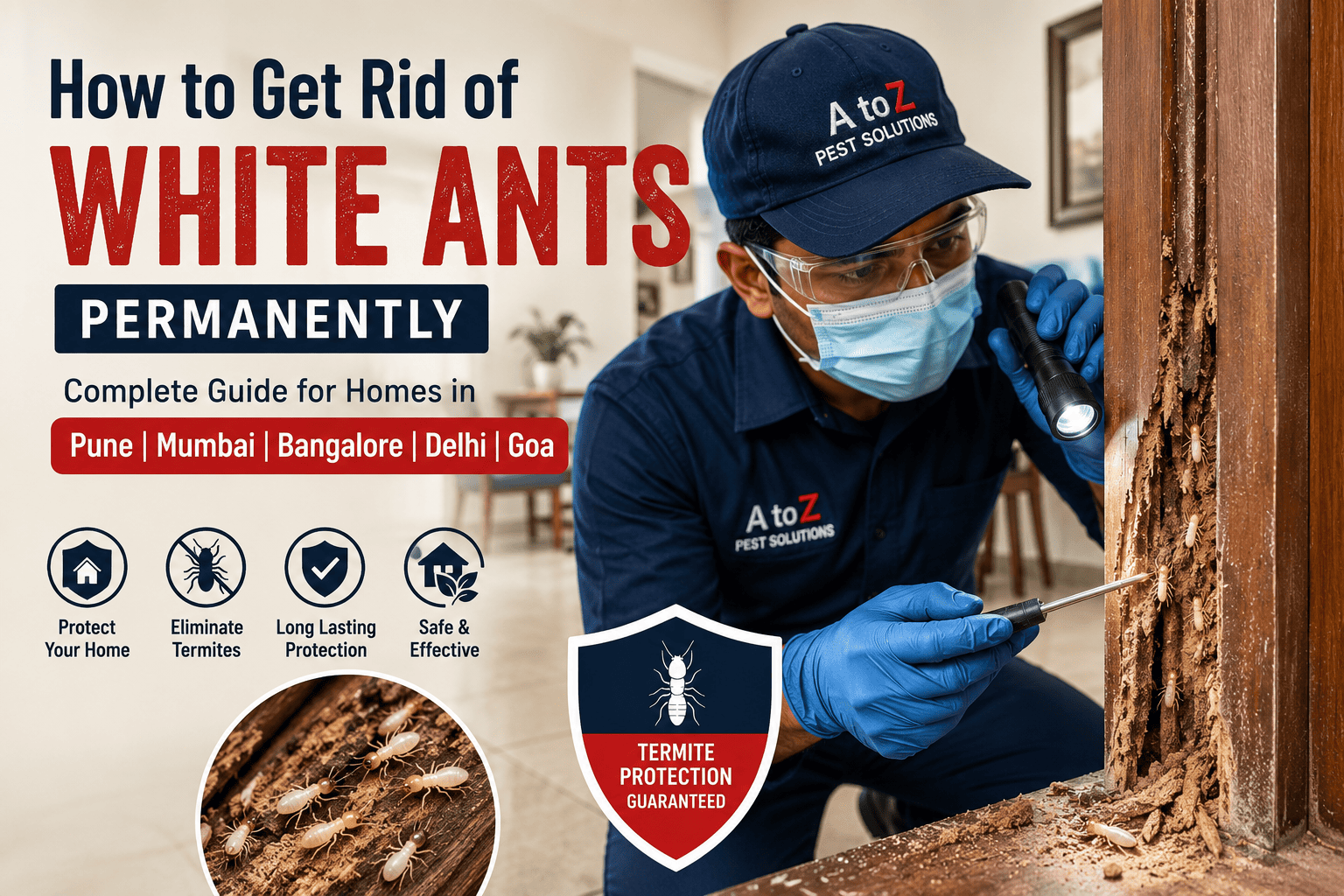
Have you noticed mud tubes on your walls, hollow wooden furniture, or tiny cream-coloured insects crawling around your home? These are often called white ants, but they are actually termites—one of the most destructive pests found in India. Every year, thousands of homeowners in Pune, Mumbai, Bangalore, Goa and Delhi suffer expensive property damage because termite infestations remain hidden until significant destruction has already occurred.
White ants silently feed on wood and other cellulose-based materials. Unlike many household pests, they usually stay concealed inside walls, wooden furniture, ceilings, door frames, flooring, and foundations. By the time visible signs appear, termites may have been active for months or even years.
If you’re wondering how to get rid of white ants permanently, the first step is understanding how termites behave, why they invade homes, and which treatment methods provide long-lasting protection. Acting early can save you from costly repairs and help preserve the value of your property.
In this comprehensive guide, you’ll learn:
- What white ants are and why they invade homes
- Common signs of a termite infestation
- Why homes in Pune, Mumbai, Bangalore, and Delhi are vulnerable
- DIY methods that may help with minor issues
- When professional termite treatment is the best solution
- Practical prevention tips to keep termites away
- Answers to frequently asked questions
Whether you own a house, apartment, villa, office, shop, warehouse, or commercial property, this guide will help you understand how to get rid of white ants permanently and protect your investment.
What Are White Ants?
Despite their common name, white ants are not ants. They are termites, social insects that live in colonies and feed on cellulose, the main component found in wood, paper, cardboard, and plant material.
A termite colony contains different groups known as castes:
Worker Termites
Workers are responsible for finding food, feeding the colony, building tunnels, and maintaining the nest. These are the termites that cause most property damage.
Soldier Termites
Soldiers protect the colony from predators such as ants. They have larger heads and stronger jaws but do not damage wood directly.
Reproductive Termites
These include kings, queens, and winged termites known as swarmers. During certain seasons, winged termites leave the colony to establish new nests.
Understanding termite behaviour is essential when deciding how to get rid of white ants permanently, because simply killing the visible insects does not eliminate the hidden colony underground.
Are White Ants and Termites the Same?
Yes. In India, many people use the term white ants to describe termites because of their pale colour and ant-like appearance.
However, there are important differences.
| White Ants (Termites) | Ants |
|---|---|
| Feed on wood and cellulose | Feed on various foods |
| Straight antennae | Bent antennae |
| Thick waist | Narrow waist |
| Equal-sized wings (during swarming) | Front wings larger than hind wings |
| Live in hidden colonies | Often build visible nests |
Knowing the difference helps ensure you choose the correct treatment. Products designed for ordinary ants are generally ineffective against termite colonies.
Why Are White Ants a Serious Problem?
Many homeowners ignore termites because they rarely see them in the open. Unfortunately, termites are among the most destructive structural pests in the world.
They can damage:
- Wooden doors
- Door frames
- Window frames
- Wardrobes
- Modular kitchens
- Wooden flooring
- False ceilings
- Plywood
- Furniture
- Books
- Paper documents
- Cardboard boxes
- Wooden storage shelves
Subterranean termites travel through hidden mud tunnels beneath the soil and inside walls. They consume wood from the inside out, leaving only a thin outer layer. As a result, furniture or structural timber may appear normal until it suddenly becomes weak or collapses.
Learning how to get rid of white ants permanently is essential because untreated infestations continue to grow and can spread throughout an entire property.
Why Homes in Pune, Mumbai, Bangalore, Goa and Delhi Are at Risk
Termites are found across India, but certain environmental conditions make infestations more common in major cities.
Bangalore
Bangalore’s moderate climate, expanding residential developments, landscaped gardens, and widespread use of wooden interiors create favourable conditions for subterranean termites. Moist soil around foundations and irrigation systems can further increase termite activity.
Pune
Rapid urban development, new housing projects, and seasonal rainfall contribute to termite problems across Pune. Older homes with untreated wooden structures are particularly vulnerable.
Mumbai
Mumbai’s humid coastal climate creates ideal conditions for termite colonies. Moisture from monsoon rains and high humidity levels often accelerate termite activity, especially in apartments, offices, and commercial buildings.
Goa
Goa’s tropical climate, high humidity, coastal environment, and extended monsoon season create ideal conditions for termite activity. Wooden homes, villas, resorts, and holiday properties are particularly vulnerable, making regular termite inspections and professional treatment essential for long-term protection.
Delhi
Although Delhi experiences hotter summers, termites remain active throughout the year. Underground colonies survive in moist soil around foundations, parks, gardens, and landscaped residential areas before spreading into nearby buildings.
No matter where you live, understanding how to get rid of white ants permanently helps reduce the risk of extensive structural damage.
Common Signs of a White Ant Infestation
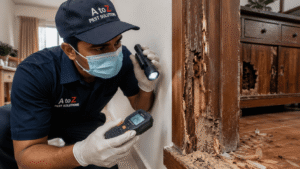
Early detection plays a major role in successful termite control.
Watch for these warning signs:
Mud Tubes
Termites build pencil-sized mud tunnels along walls, foundations, and pillars to travel safely between the soil and food sources.
Hollow Wood
Tap wooden furniture or door frames. If they sound hollow or papery, termites may have eaten the wood from inside.
Discarded Wings
Winged termites often swarm during warm or humid weather. After mating, they shed their wings near windows, doors, or lights.
Bubbling Paint
Moisture trapped by termite activity may cause paint to blister or peel.
Tight Doors and Windows
Wood damaged by termites can swell, making doors and windows difficult to open or close.
Tiny Holes in Wood
Small holes or cracks may indicate hidden termite galleries inside wooden structures.
If you notice any of these signs, it’s important to inspect the affected area promptly rather than waiting for the damage to worsen.
What Causes White Ant Infestations?
Several conditions attract termites into homes.
Excess Moisture
Leaking pipes, poor drainage, damp walls, and waterlogged soil create ideal environments for termite colonies.
Wooden Debris
Tree stumps, old timber, firewood, cardboard, and construction waste provide food sources close to buildings.
Foundation Cracks
Even tiny gaps around foundations, plumbing lines, and utility pipes can allow subterranean termites to enter.
Untreated Wood
Wood that has not been protected against termites is more susceptible to infestation, especially when in direct contact with soil.
Poor Ventilation
Dark, humid spaces beneath floors, inside storage rooms, or around basements encourage termite activity.
Removing these risk factors is an important part of learning how to get rid of white ants permanently and preventing future infestations.
Why DIY Solutions Often Fail
Many homeowners try home remedies such as vinegar, kerosene, bleach, or insect sprays after spotting termites.
While these methods may kill a few visible insects, they rarely eliminate the hidden colony underground. Worker termites continue to feed inside walls, beneath floors, and around foundations, allowing the infestation to return.
Successful termite management requires locating the source of the infestation, understanding the termite species involved, and applying an appropriate treatment strategy. This is why persistent or widespread infestations often require professional assessment.
How to Get Rid of White Ants Permanently
If you’ve discovered termites in your home, your first question is probably “How do I get rid of white ants permanently?” The answer depends on the severity of the infestation. Small, isolated infestations may be managed temporarily, but large or hidden colonies usually require professional termite treatment.
Below are the most effective methods for controlling termites and protecting your property.
Step 1: Confirm That They Are White Ants (Termites)
Before starting any treatment, make sure the insects are actually termites.
Look for these characteristics:
- Creamy white or light brown colour
- Soft body
- Straight antennae
- Thick waist
- Mud tubes near walls or foundations
- Hollow wooden furniture
- Discarded wings near windows or lights
Correct identification helps you choose the right treatment method. Products meant for common household ants will not eliminate termite colonies.
Step 2: Find the Source of the Infestation
White ants rarely stay in one place. They usually enter through:
- Foundation cracks
- Wall joints
- Wooden door frames
- Window frames
- Kitchen cabinets
- Wardrobes
- False ceilings
- Wooden flooring
- Utility pipe openings
- Damp walls
Inspect your property carefully to determine where termite activity is highest.
Step 3: Remove Conditions That Attract White Ants
Eliminating favourable conditions can slow termite activity and reduce the chance of reinfestation.
Reduce Moisture
Repair leaking taps, plumbing pipes, roof leaks, and drainage problems. Moist soil attracts subterranean termites.
Remove Wooden Debris
Dispose of:
- Firewood
- Tree stumps
- Cardboard
- Old plywood
- Wooden packing material
- Dead roots
Avoid storing wood directly against exterior walls.
Improve Ventilation
Ensure proper airflow in storage rooms, basements, and other enclosed spaces to reduce dampness.
Seal Entry Points
Seal cracks around:
- Plumbing pipes
- Electrical conduits
- Wall joints
- Window frames
- Foundation openings
These preventive steps support long-term termite management.
DIY Methods for White Ant Control
Many homeowners try home remedies before contacting a professional. While some methods may reduce visible termite activity, they generally do not eliminate the hidden colony.
Boric Acid
Boric acid can kill termites that come into direct contact with it. It is sometimes used for treating small, localised infestations in exposed wooden items.
However, it does not usually reach the queen or the entire colony.
Orange Oil
Orange oil contains compounds that can affect termites when applied directly to infested wood.
Its effectiveness is generally limited to the treated area and is not considered a complete solution for widespread infestations.
Cardboard Trap
Moist cardboard may attract termites because it contains cellulose.
Once termites gather, the cardboard can be removed and discarded. This may reduce the number of visible termites but will not destroy the underground colony.
Sunlight Exposure
If termites are found in movable furniture, exposing the furniture to direct sunlight for several hours may help reduce moisture and discourage termite activity.
This method is not suitable for termites hidden inside walls or structural timber.
Vinegar and Lemon
Some people recommend vinegar-based home remedies, but there is limited scientific evidence that they eliminate established termite colonies.
These solutions should not be relied upon for serious infestations.
Why DIY Methods Usually Fail
DIY treatments often appear successful because the visible termites disappear.
Unfortunately, the colony remains active underground.
A mature subterranean termite colony can contain hundreds of thousands—or even millions—of termites. Killing only the workers you can see does not eliminate:
- The queen
- The king
- Eggs
- Nymphs
- Hidden worker termites
- Satellite colonies
This is why homeowners often see termites return a few weeks or months after attempting DIY treatment.
If your goal is how to get rid of white ants permanently, professional termite treatment is usually the most reliable option.
Professional White Ant Treatment
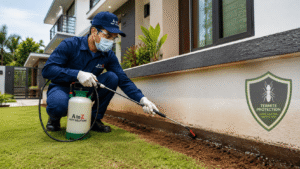
Professional termite control targets the source of the infestation rather than just the visible insects.
Depending on the property and infestation level, professionals may recommend different treatment methods.
Soil Barrier Treatment
A chemical barrier is created around the building’s foundation by treating the soil with approved termiticides.
This method is highly effective against subterranean termites because it blocks their entry into the building.
It is commonly used for:
- Houses
- Villas
- Apartments
- Commercial buildings
- Offices
- Warehouses
Post-Construction Anti-Termite Treatment
If termites appear after a building has been completed, technicians treat the affected areas by accessing termite pathways around walls, floors, foundations, and other vulnerable locations.
This post construction treatment is designed to interrupt termite movement and protect the structure.
Pre-Construction Anti-Termite Treatment
For new buildings, pre-construction anti-termite treatment is one of the most effective preventive measures.
The soil beneath the foundation is treated before construction progresses, creating a long-lasting protective barrier against subterranean termites.
Wood Treatment
When termites attack wooden furniture, wardrobes, or doors, professionals may treat affected timber using specialised products suitable for wood protection.
The treatment approach depends on the extent of the infestation and the condition of the wood.
Termite Inspection
A professional inspection helps identify:
- Entry points
- Species involved
- Extent of infestation
- Moisture sources
- Structural risks
- Areas requiring treatment
Early inspection often prevents more extensive damage later.
Choosing the Right Termite Control Company
Not all pest control providers offer the same level of expertise.
Before hiring a company, consider the following:
Experience
Choose a company with proven experience in termite management.
Licensed Technicians
Ensure treatments are carried out by trained professionals using approved products.
Site Inspection
A thorough inspection should be completed before recommending a treatment plan.
Transparent Pricing
Ask for a written quotation explaining what is included in the service.
Customer Reviews
Check recent customer feedback to understand the company’s service quality and reliability.
Why White Ants Return After Treatment
Many homeowners become frustrated when termites return after treatment.
Some common reasons include:
- Incomplete treatment
- Untreated sections of the property
- Moisture problems
- Disturbed soil barriers
- New termite colonies nearby
- Structural changes after treatment
- Poor-quality application
Regular inspections and preventive maintenance help reduce the likelihood of future infestations.
White Ant Prevention Tips
Preventing termites is usually much easier than repairing termite damage.
Follow these practical tips:
- Keep wooden furniture dry.
- Repair plumbing leaks quickly.
- Remove dead tree roots near the house.
- Avoid storing cardboard on the floor.
- Maintain proper drainage around the building.
- Keep firewood away from exterior walls.
- Inspect wooden doors and windows regularly.
- Schedule periodic termite inspections.
- Use termite-resistant materials where appropriate.
- Consider pre-construction anti-termite treatment for new buildings.
These measures can significantly reduce the risk of termite activity in homes across Pune, Mumbai, Bangalore, Goa and Delhi.
How Much Does White Ant (Termite) Treatment Cost in India?
One of the most common questions homeowners ask is, “How much does it cost to get rid of white ants permanently?”
The answer depends on several factors, including:
- Size of the property
- Type of termite infestation
- Residential or commercial building
- Number of affected areas
- Construction type
- Severity of damage
- Treatment method required
- Accessibility of the affected areas
For example, a small apartment with a localised infestation may require a different treatment plan than a large villa or commercial warehouse with widespread termite activity.
Instead of choosing the cheapest service, compare companies based on:
- Experience and expertise
- Inspection quality
- Use of government-approved termiticides
- Licensed technicians
- Scope of treatment
- Customer reviews
- Service warranty (where offered)
A professional inspection is the best way to receive an accurate quotation tailored to your property.
Common Mistakes Homeowners Make
Many termite infestations become worse because homeowners unknowingly delay or choose ineffective solutions.
Here are some of the most common mistakes.
Ignoring Early Warning Signs
Mud tubes, discarded wings, bubbling paint, and hollow wood are often dismissed until the damage becomes severe.
Early action can significantly reduce repair costs.
Using Household Insect Sprays
Regular insect sprays may kill a few visible termites but do not reach the underground colony.
This often creates the false impression that the problem has been solved.
Delaying Professional Inspection
Waiting several months allows the colony to expand, increasing damage to wooden structures and interiors.
Fixing Furniture Without Treating the Colony
Replacing damaged doors or furniture without eliminating termites usually results in reinfestation.
The hidden colony continues feeding on newly installed wood.
Ignoring Moisture Problems
Leaking plumbing, damp walls, and poor drainage create ideal conditions for termite colonies.
Addressing moisture issues is an important part of long-term termite prevention.
Why Professional Termite Control Is Worth It
Professional termite treatment offers advantages that DIY methods cannot provide.
Accurate Identification
Experts determine whether the infestation involves subterranean termites or another termite species.
Complete Property Inspection
Professionals inspect:
- Foundations
- Wooden furniture
- False ceilings
- Wall cavities
- Utility pipe entry points
- Storage rooms
- Kitchens
- Bathrooms
- Outdoor landscaping
Targeted Treatment
Instead of treating only visible termites, professionals focus on eliminating termite pathways and reducing the risk of continued infestation.
Long-Term Protection
A professionally planned treatment strategy provides far greater protection than temporary household remedies.
How to Prevent White Ants from Returning
Even after successful treatment, preventive maintenance is essential.
Follow these recommendations:
Keep Wood Away from Soil
Avoid direct contact between untreated wood and soil.
Store firewood on raised platforms.
Repair Water Leaks Immediately
Fix leaking pipes, taps, roofs, and drainage systems before moisture attracts termites.
Remove Dead Trees and Stumps
Old tree roots and decaying timber near buildings provide food for termite colonies.
Keep the Property Clean
Dispose of:
- Old newspapers
- Cardboard
- Wooden waste
- Packaging materials
- Unused plywood
Schedule Regular Inspections
Annual termite inspections help detect problems before major structural damage occurs.
This is especially important in cities such as Pune, Mumbai, Bangalore, Goa and Delhi, where termite activity is common.
White Ant Prevention Checklist
Use this simple checklist to reduce termite risk around your property.
◉ Inspect wooden furniture every few months.
◉ Check for mud tubes around foundations.
◉ Repair leaking plumbing promptly.
◉ Remove wooden debris from the garden.
◉ Improve drainage around the property.
◉ Store firewood away from walls.
◉ Seal foundation cracks and pipe openings.
◉ Keep indoor humidity under control.
◉ Arrange regular professional termite inspections.
◉ Consider pre-construction anti-termite treatment for new buildings.
Frequently Asked Questions
1. Are white ants and termites the same?
Yes. In India, the term “white ants” is commonly used for termites. Although they resemble ants, termites belong to a different insect group and require different control methods.
2. What causes white ants in homes?
Common causes include excessive moisture, untreated wood, foundation cracks, wooden debris, leaking pipes, poor drainage, and direct wood-to-soil contact.
3. Can white ants damage concrete?
Termites do not eat concrete. However, they can travel through tiny cracks and gaps in concrete to reach wooden structures inside a building.
4. How long does professional termite treatment last?
The duration depends on the treatment method, property conditions, and environmental factors. Regular inspections help maintain long-term protection.
5. Can I remove termites permanently using home remedies?
DIY methods may reduce visible termites but usually do not eliminate the hidden colony. Professional treatment is generally more effective for established infestations.
6. Which areas of a home are most vulnerable?
Common high-risk areas include:
- Wooden doors
- Door frames
- Windows
- Kitchens
- Wardrobes
- False ceilings
- Wooden flooring
- Storage rooms
- Foundations
7. How do I know if termites have returned?
Watch for:
- Mud tubes
- Hollow wood
- Swarming termites
- Discarded wings
- Bubbling paint
- Tight-fitting doors or windows
If you notice any of these signs, arrange a professional inspection.
8. Is termite treatment safe?
When performed by trained professionals using approved products according to label instructions and safety guidelines, termite treatment is designed to be carried out safely.
9. Should I inspect my property every year?
Yes. Annual termite inspections help identify early signs of infestation and reduce the likelihood of extensive damage.
10. Which cities have a higher risk of termite infestations?
Termites are found throughout India, but environmental conditions make infestations particularly common in Pune, Mumbai, Bangalore, Goa and Delhi, as well as many other urban and suburban areas.
Final Thoughts
White ants are silent destroyers that can cause significant damage to homes, offices, warehouses, and commercial buildings before homeowners even realise there is a problem. Because termites live underground and inside wooden structures, they often remain hidden until repairs become expensive.
If you want to know how to get rid of white ants permanently, the most effective approach is to combine early detection, moisture control, regular inspections, and professional termite treatment when needed. Preventive measures, such as eliminating wood-to-soil contact and addressing leaks promptly, can greatly reduce the risk of infestation.
Whether you live in Pune, Mumbai, Bangalore, Goa or Delhi, protecting your property from termites is an investment in its long-term safety and value.
Why Choose Termite Professionals ?
If you’re looking for reliable white ant treatment or professional termite control, Termite Experts of India provides expert termite management for residential and commercial properties across major Indian cities.
Why Customers Choose Us
- Experienced termite control specialists
- Government-approved termite treatment solutions
- Advanced inspection and treatment methods
- Residential and commercial termite control
- Pre-construction and post-construction termite treatment
- Transparent pricing with no hidden charges
- Prompt appointments and professional service
- Long-term termite management solutions
Don’t let white ants damage your valuable property. Book a professional termite inspection today and protect your home or business with expert termite control services.