Termite Inspection in Goa: Everything You Need to Know Before It’s Too Late

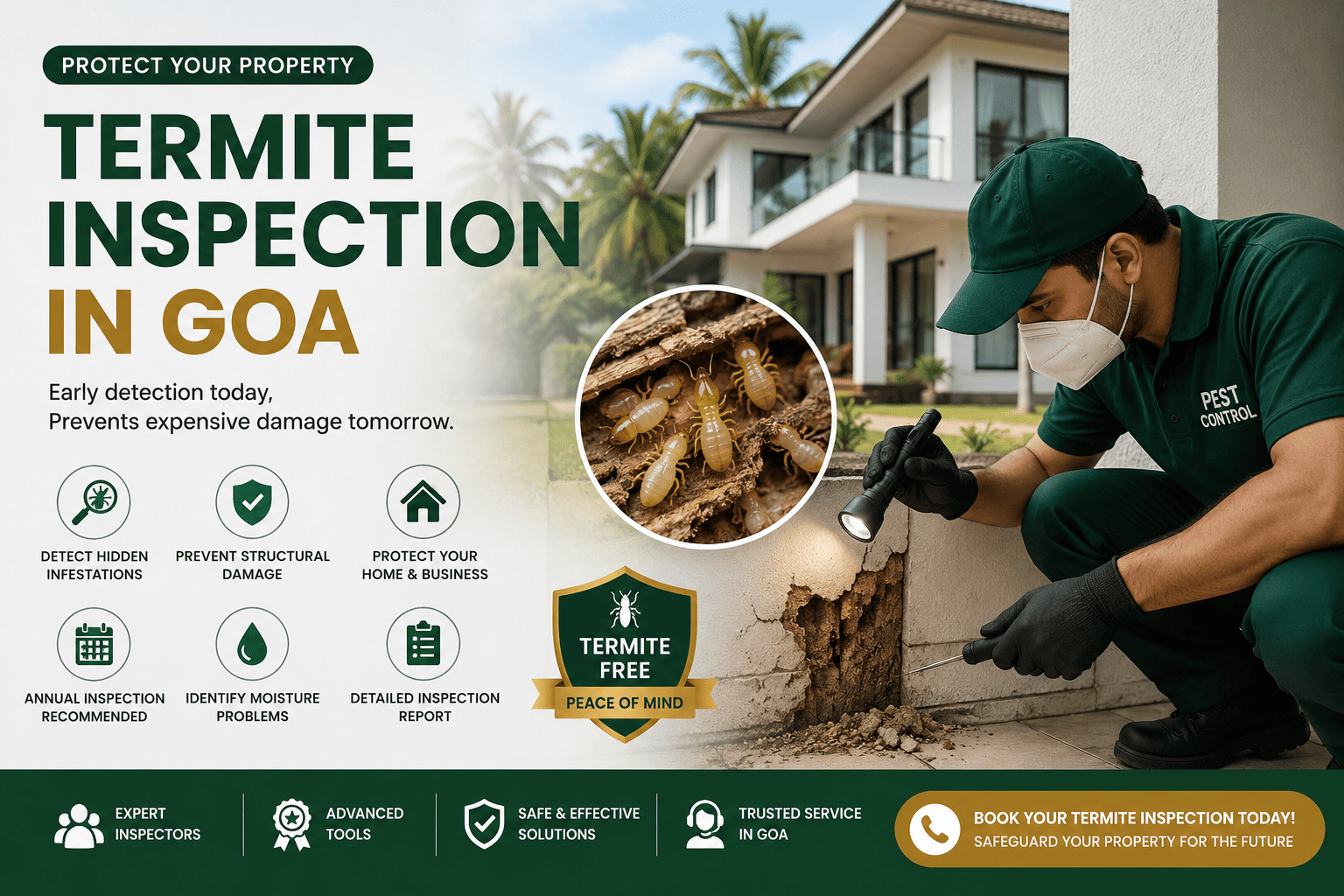
Professional termite inspection in Goa with a pest control technician checking a home's foundation for signs of termite infestation.

Termite Inspection in Goa: Everything You Need to Know Before It’s Too Late

Goa is famous for its beautiful beaches, lush greenery, tropical climate, and charming Portuguese-style homes. While these features make Goa one of India’s most desirable places to live and invest in property, they also create the perfect environment for one of the most destructive pests—termites.

Thousands of homeowners discover termite damage only after wooden furniture, doors, cabinets, or structural timber have already been severely affected. Unfortunately, termites work silently behind walls, under floors, and inside wooden structures, making them difficult to detect without a professional inspection.

That’s why scheduling a termite inspection in Goa is one of the smartest investments for homeowners, apartment owners, villa owners, hotels, restaurants, offices, schools, and commercial buildings.

A professional termite inspection helps identify termite activity early, preventing costly repairs and protecting your property’s value.

Why Goa Has a High Risk of Termite Infestation

Goa’s climate naturally supports termite colonies.

Several environmental conditions contribute to termite growth:

  • High humidity throughout the year
  • Heavy monsoon rainfall
  • Warm tropical temperatures
  • Wooden houses and furniture
  • Moist soil around buildings
  • Garden landscapes
  • Coconut and palm trees
  • Old timber structures

Subterranean termites especially thrive in damp soil, creating underground tunnels that allow them to invade homes unnoticed.

Because of these favorable conditions, experts recommend regular termite inspection in Goa, especially before and after the monsoon season.

What Is a Termite Inspection?

A termite inspection is a detailed examination of a property conducted by trained professionals to detect:

  • Active termite colonies
  • Termite mud tubes
  • Wood damage
  • Hollow wooden structures
  • Moisture problems
  • Entry points
  • Conditions encouraging termite activity
  • Previous termite damage
  • Hidden infestations

Unlike a basic visual check, professional inspectors use systematic methods to examine both visible and concealed areas where termites are likely to thrive.

The goal is early detection before termites cause extensive structural damage.

Why Professional Termite Inspection Is Important

Many people believe that termites only attack old houses.

This is completely false.

Termites attack:

  • Newly constructed homes
  • Luxury villas
  • Apartments
  • Wooden cottages
  • Resorts
  • Hotels
  • Commercial offices
  • Restaurants
  • Warehouses
  • Educational institutions
  • Hospitals

Even premium furniture made from hardwood is vulnerable.

Professional termite inspection in Goa helps identify problems before they become expensive repairs.

Common Areas Inspected During a Termite Inspection

A comprehensive inspection covers nearly every part of your property.

Inspectors typically examine:

Interior Areas

  • Wooden doors
  • Door frames
  • Window frames
  • Wardrobes
  • Kitchen cabinets
  • False ceilings
  • Wooden flooring
  • Staircases
  • Furniture
  • Loft storage
  • Utility rooms

Exterior Areas

  • Foundation walls
  • Garden boundaries
  • Wooden fencing
  • Tree stumps
  • Decking
  • Pergolas
  • Outdoor furniture
  • Garage structures
  • Drainage systems

Hidden Areas

  • Crawl spaces
  • Basements
  • Roof timber
  • Electrical conduits
  • Plumbing entry points
  • Wall cavities
  • Expansion joints

Early Signs You Need a Termite Inspection in Goa

Many homeowners ignore early warning signs because termites remain hidden.

Watch for these indicators:

Mud Tubes

Subterranean termites build pencil-sized mud tubes along walls, foundations, and pipes.

These tubes protect termites while traveling between their colony and food source.

Hollow Wood

Tap wooden furniture or doors.

If they sound hollow, termites may have eaten the inside while leaving the surface intact.

Bubbling Paint

Paint that appears bubbled or swollen often indicates moisture caused by termite activity.

Tight Doors and Windows

Warped wood resulting from termite damage can make doors and windows difficult to open.

Discarded Wings

Flying termites shed their wings after mating.

Small piles of transparent wings near windows or lights are a warning sign.

Frass

Drywood termites leave behind tiny pellet-like droppings resembling sawdust.

Sagging Floors

Advanced infestations may weaken flooring systems.

Cracked Wooden Furniture

Internal termite feeding weakens furniture from the inside out.

Different Types of Termites Found in Goa

Understanding termite species helps determine the right inspection and treatment strategy.

Subterranean Termites

These are the most destructive termites in Goa.

Characteristics:

  • Live underground
  • Build mud tubes
  • Large colonies
  • Attack foundations
  • Spread quickly
  • Cause severe structural damage

Drywood Termites

Unlike subterranean termites, drywood termites live entirely inside wood.

Commonly found in:

  • Furniture
  • Wooden doors
  • Antique furniture
  • Roof beams
  • Cabinets

Dampwood Termites

These termites prefer moist timber.

They often infest:

  • Water-damaged wood
  • Leaking roofs
  • Damp basements
  • Rotten logs

Who Should Schedule a Termite Inspection?

Professional termite inspection is recommended for:

  • Homeowners
  • Villa owners
  • Apartment owners
  • Property investors
  • Hotels
  • Resorts
  • Restaurants
  • Offices
  • Builders
  • Real estate developers
  • Schools
  • Warehouses
  • Hospitals

Even if no visible termites are present, preventive inspections can detect hidden infestations before major damage occurs.

Benefits of Regular Termite Inspection in Goa

Routine inspections provide long-term protection and peace of mind.

Key benefits include:

  • Early detection of termite colonies
  • Reduced repair costs
  • Protection of wooden furniture
  • Improved property value
  • Prevention of structural damage
  • Safer living environment
  • Long-term savings
  • Better pest management planning
  • Increased confidence during property sales or purchases
How a Professional Termite Inspection in Goa Is Conducted

Many homeowners believe a termite inspection simply involves looking around the property for visible signs of termites. In reality, a professional termite inspection in Goa follows a systematic process designed to detect both active infestations and conditions that could lead to future termite problems.

A trained termite inspector examines the property from top to bottom, including areas where termites commonly hide.

Step 1: Exterior Property Inspection

The inspection usually begins outside the building.

Inspectors carefully examine:

  • Building foundations
  • Exterior walls
  • Garden areas
  • Wooden fencing
  • Tree stumps
  • Decks and pergolas
  • Landscaping timber
  • Drainage systems
  • Water accumulation zones

Special attention is given to areas where wood comes into direct contact with soil, as these are common termite entry points.

Step 2: Interior Inspection

The inspector then moves indoors to inspect all wooden structures and hidden termite-prone areas.

Areas examined include:

  • Door frames
  • Window frames
  • Kitchen cabinets
  • Wardrobes
  • Wooden flooring
  • False ceilings
  • Furniture
  • Staircases
  • Utility rooms
  • Storage spaces

The goal is to identify:

  • Termite activity
  • Hollow wood
  • Moisture damage
  • Mud tubes
  • Frass (termite droppings)
  • Structural weaknesses

Step 3: Moisture Assessment

Moisture is one of the biggest factors attracting termites.

Inspectors check:

  • Leaking pipes
  • Bathroom walls
  • Kitchen plumbing
  • Roof leaks
  • Damp walls
  • Water seepage zones

Excess moisture often indicates a high-risk environment for termite colonies.

Step 4: Identifying Termite Species

Different termite species require different treatment approaches.

A professional termite inspection in Goa helps determine whether the infestation involves:

  • Subterranean termites
  • Drywood termites
  • Dampwood termites

Identifying the species ensures the most effective termite treatment plan.

Step 5: Inspection Report

After the inspection, homeowners typically receive a detailed report outlining:

  • Active infestations
  • Damage assessment
  • High-risk areas
  • Moisture concerns
  • Treatment recommendations
  • Prevention strategies

This report helps property owners make informed decisions about termite control and prevention.

Advanced Tools Used During Termite Inspection

Modern termite inspection techniques are far more effective than simple visual checks.

Professional termite inspectors may use:

Moisture Meters

These devices detect hidden moisture within walls and wooden structures.

Since termites are attracted to damp conditions, moisture meters help identify vulnerable areas.

Inspection Probes

Inspectors use specialized probes to test wood integrity and locate hollow sections caused by termite feeding.

Flashlights and Borescopes

Small cameras and high-powered lights allow inspectors to examine concealed areas such as:

  • Wall cavities
  • False ceilings
  • Crawl spaces
  • Roof voids

Thermal Imaging Technology

Advanced termite inspection companies may use thermal imaging cameras.

These cameras help identify:

  • Moisture pockets
  • Hidden termite activity
  • Temperature variations caused by infestations

Thermal imaging improves the accuracy of termite detection in large properties.

Cost of Termite Inspection in Goa

One of the most common questions homeowners ask is:

How much does termite inspection in Goa cost?

Costs vary depending on:

  • Property size
  • Building type
  • Inspection complexity
  • Commercial vs residential property
  • Inspection technology used

Typical factors influencing pricing include:

Residential Properties

  • Apartments
  • Villas
  • Independent houses
  • Holiday homes

Commercial Properties

  • Hotels
  • Resorts
  • Restaurants
  • Warehouses
  • Offices
  • Educational institutions

While inspection costs vary, they are significantly lower than the expense of repairing severe termite damage.

Investing in regular termite inspection is often the most cost-effective way to protect a property.

Pre-Construction Termite Inspection in Goa

Preventing termites before construction begins is highly effective.

Pre-construction termite inspection involves evaluating:

  • Soil conditions
  • Foundation plans
  • Construction materials
  • Moisture risks

Builders often combine inspections with pre-construction anti termite treatment to establish long-term protection.

Benefits include:

  • Reduced infestation risk
  • Lower future treatment costs
  • Enhanced structural protection
  • Increased property lifespan

Post-Construction Termite Inspection

Even newly built homes can develop termite problems.

A post-construction termite inspection in Goa helps identify:

  • Hidden termite entry points
  • Foundation vulnerabilities
  • Moisture issues
  • Existing termite activity

Regular inspections remain important throughout the property’s life cycle.

Importance of Termite Inspection Before Buying Property

Buying a home without a termite inspection can be an expensive mistake.

Before purchasing:

  • Apartments
  • Villas
  • Independent houses
  • Resorts
  • Commercial properties

A termite inspection should be conducted to identify hidden issues.

Benefits include:

Avoiding Unexpected Repairs

Severe termite damage can cost lakhs of rupees to repair.

Better Negotiation

Inspection findings may help buyers negotiate property prices.

Peace of Mind

Knowing the property is termite-free provides confidence in the investment.

Why Hotels and Resorts in Goa Need Regular Termite Inspection

Goa’s hospitality industry relies heavily on wooden furniture and attractive interiors.

Termites can damage:

  • Wooden beds
  • Reception desks
  • Decorative woodwork
  • Flooring
  • Ceiling panels
  • Outdoor furniture

Regular termite inspections help hotels and resorts:

  • Protect their reputation
  • Prevent expensive repairs
  • Maintain guest satisfaction
  • Avoid structural deterioration

For hospitality businesses, preventive inspections are essential.

Commercial Property Termite Inspection in Goa

Commercial buildings face unique termite risks due to:

  • Larger structures
  • Extensive woodwork
  • Storage areas
  • Landscaping features

Businesses requiring routine inspections include:

  • Offices
  • Warehouses
  • Retail stores
  • Restaurants
  • Educational institutions
  • Healthcare facilities

Regular inspections reduce operational disruptions and repair expenses.

Why Monsoon Season Increases Termite Activity

The Goa monsoon creates ideal conditions for termites.

Factors include:

  • Increased humidity
  • Moist soil
  • Water seepage
  • Damp wooden structures

Many termite colonies become highly active during and immediately after the rainy season.

This makes pre-monsoon and post-monsoon termite inspections particularly important.

Common Mistakes Homeowners Make

Severe termite infestation inside a residential home showing damaged wooden door frames, mud tubes, and structural wood destruction.

Many infestations become severe because homeowners overlook early warning signs.

Common mistakes include:

Ignoring Mud Tubes

Small mud tubes are often the first visible sign of termites.

Ignoring them allows colonies to expand.

Delaying Professional Inspection

Waiting until visible damage appears often results in higher repair costs.

Assuming New Homes Are Safe

Termites can infest both old and newly constructed buildings.

Ignoring Moisture Problems

Leaking pipes and damp walls create ideal termite conditions.

Relying Solely on DIY Solutions

Store-bought termite sprays rarely eliminate entire colonies.

Professional inspection remains essential for effective control.

How Often Should You Schedule a Termite Inspection in Goa?

Experts generally recommend:

Residential Properties

At least once every year.

High-Risk Properties

Every 6 to 12 months.

Hotels and Resorts

Twice annually.

Commercial Buildings

Annual inspections or more frequently depending on risk factors.

Regular inspections significantly reduce the likelihood of severe infestations.

How to Prevent Termite Infestation in Goa

While a professional termite inspection in Goa is essential for early detection, prevention is always better than dealing with expensive repairs. Goa’s tropical climate, high humidity, and frequent rainfall create ideal conditions for termites to thrive. Following these preventive measures can significantly reduce the risk of infestation.

Keep Wood Away from Soil

Subterranean termites usually enter buildings through the soil. Avoid placing wooden furniture, firewood, or timber directly on the ground. Use concrete or metal supports whenever possible.

Fix Water Leaks Immediately

Leaking pipes, damp walls, roof leaks, and poor drainage attract termites. Repair plumbing issues promptly and ensure water does not accumulate around your property’s foundation.

Improve Ventilation

Poor ventilation increases moisture levels inside your home. Keep crawl spaces, attics, basements, and storage rooms well-ventilated to reduce humidity.

Remove Dead Trees and Wood Debris

Tree stumps, fallen branches, and old timber near your property can become breeding grounds for termites. Removing them helps reduce the chances of termites spreading to your home.

Store Firewood Properly

If you store firewood, keep it elevated and away from the house. Never stack firewood directly against exterior walls.

Seal Entry Points

Seal cracks in:

  • Foundation walls
  • Utility pipe openings
  • Expansion joints
  • Window frames
  • Door frames

Blocking entry points makes it more difficult for termites to access your property.

Schedule Annual Termite Inspection in Goa

Even if there are no visible signs of termites, a yearly termite inspection in Goa is strongly recommended. Early detection prevents extensive damage and costly repairs.

Long-Term Termite Management Plan

Protecting your property requires more than a one-time inspection. A long-term termite management plan ensures ongoing protection.

Every Month

  • Check wooden furniture for damage.
  • Look for mud tubes around the foundation.
  • Inspect doors and windows for unusual tightness.
  • Watch for discarded termite wings.

Every Three Months

  • Inspect outdoor wooden structures.
  • Remove wood debris from the garden.
  • Check for moisture around plumbing and drainage.

Every Six Months

  • Inspect roof spaces and false ceilings.
  • Examine storage areas and basements.
  • Monitor wooden flooring and skirting boards.

Every Year

  • Schedule a professional termite inspection in Goa.
  • Address any moisture issues.
  • Repair damaged wood before termites spread.

Consistent inspections and maintenance help keep your home protected year after year.

Frequently Asked Questions (FAQs)

1. Why is termite inspection in Goa important?

Goa’s humid climate encourages termite activity throughout the year. Regular inspections help detect infestations early and prevent costly structural damage.

2. How often should I schedule a termite inspection in Goa?

Most residential properties should be inspected at least once a year. High-risk properties, hotels, and commercial buildings may benefit from inspections every six months.

3. What are the early signs of termites?

Common signs include:

  • Mud tubes
  • Hollow wood
  • Discarded wings
  • Bubbling paint
  • Tight doors and windows
  • Tiny termite droppings (frass)

4. Can termites damage concrete buildings?

Termites do not eat concrete, but they can travel through cracks and expansion joints to reach wooden components inside the building.

5. Are new homes safe from termites?

No. Even newly constructed homes can develop termite infestations if preventive measures are not taken.

6. How long does a termite inspection take?

The duration depends on the size of the property. Most residential inspections can be completed within one to two hours.

7. Is termite inspection necessary before buying a house?

Yes. A professional inspection can identify hidden termite damage before you purchase the property, helping you avoid unexpected repair costs.

8. What attracts termites?

Termites are attracted to:

  • Moisture
  • Wooden structures
  • Soil contact with wood
  • Poor drainage
  • Dead trees
  • Damp environments

9. Can termites damage furniture?

Yes. Drywood termites commonly infest wooden furniture, wardrobes, cabinets, doors, and antique items.

10. What is the best time for termite inspection in Goa?

Inspections are recommended throughout the year, but pre-monsoon and post-monsoon inspections are especially beneficial due to increased termite activity.

11. Do apartments require termite inspection?

Yes. Although apartments may have fewer exposed wooden structures, termites can still infest doors, wardrobes, furniture, and common building areas.

12. Is termite inspection expensive?

Compared to the cost of repairing termite damage, regular inspections are a cost-effective investment in protecting your property.

13. Can termites return after treatment?

Without regular monitoring and preventive measures, new termite colonies can establish themselves over time. Annual inspections help identify any new activity early.

14. What areas are inspected during a termite inspection?

Inspectors typically examine foundations, walls, wooden furniture, doors, windows, ceilings, basements, crawl spaces, gardens, and outdoor timber structures.

15. Why should I hire professionals for termite inspection in Goa?

Professional inspectors have the experience and tools to detect hidden infestations, identify termite species, and recommend the most effective treatment and prevention strategies.

Conclusion

Ignoring termites can lead to severe structural damage, expensive repairs, and a significant reduction in your property’s value. Since termites often remain hidden until the damage becomes extensive, regular termite inspection in Goa is one of the smartest investments homeowners and business owners can make.

Whether you own a villa, apartment, holiday home, hotel, restaurant, office, or commercial building, scheduling periodic inspections helps detect termite activity before it becomes a major problem. Combined with good maintenance practices and timely professional treatment, inspections provide long-term protection against one of the most destructive pests.

Don’t wait until you notice damaged wood or collapsing furniture. Early detection is the key to protecting your investment and ensuring a safe, termite-free environment for your family, employees, or guests.

If you suspect termite activity or simply want peace of mind, arrange a professional termite inspection in Goa and take proactive steps to safeguard your property.

Call Now !