
Buying a new apartment is an exciting milestone. Whether you’ve invested in a luxury flat in Bangalore, a newly launched residential project in Mumbai, or a premium apartment in Pune, one thing you probably don’t expect to deal with is termites.
Most homeowners assume that termites are only a problem in old houses or poorly maintained buildings. Unfortunately, that’s one of the biggest misconceptions about termite infestations. In reality, termites can invade newly constructed apartments and homes much sooner than most people realise.
Across India, termite infestations in new apartments are becoming increasingly common. Homeowners often discover termite damage within just a few months or years of moving into their dream home. From modular kitchens and wooden wardrobes to door frames and false ceilings, termites can silently attack expensive wooden interiors long before visible signs of damage appear.
What makes termites particularly dangerous is their ability to remain hidden. They don’t make noise, leave obvious trails, or immediately damage visible surfaces. Instead, they feed on wood from the inside, slowly compromising the integrity of furniture and fixtures without attracting attention.
Many newly constructed apartments today feature premium wooden interiors, including:
- Modular kitchens
- Built-in wardrobes
- Wooden flooring
- Decorative wall panels
- False ceilings
- Wooden doors and frames
- Storage units
- Designer furniture
These materials are highly attractive to termites, especially when combined with moisture, concealed spaces, and untreated construction materials.
Cities like Bangalore, Mumbai, Pune, Hyderabad, Chennai, Delhi NCR, and Gurgaon are witnessing rapid urban development, with thousands of residential projects being completed every year. Unfortunately, termite infestations have also become increasingly common in these fast-growing metropolitan areas due to extensive construction activity and favourable environmental conditions.
The good news is that termite infestations are preventable. Early termite inspections, professional anti-termite treatments, and proper maintenance can significantly reduce the risk of termite damage in new homes.
If you’re moving into a new apartment or have recently noticed signs of termite activity, this guide will help you protect your investment and avoid costly repairs.
Can New Apartments Get Termites?
The simple answer is:
Yes, absolutely.
Many homeowners are surprised to learn that termites do not discriminate between old and new buildings. A brand-new apartment can be just as vulnerable to termite infestations as a 20-year-old home if proper termite prevention measures have not been implemented.
Termites are primarily attracted to three things:
- Cellulose-based materials (wood and paper)
- Moisture
- Dark, concealed spaces
Modern apartments provide all three.
Termites can infest:
- Modular kitchen cabinets
- Wooden wardrobes
- Door frames
- Wooden flooring
- False ceilings
- Utility storage areas
- Wooden furniture
- Wall-mounted cabinets
Contrary to popular belief, termites are not attracted to dirt or poor housekeeping. Even impeccably maintained luxury apartments can develop termite infestations.
Homeowners living in premium residential projects in cities such as Bangalore, Pune, Mumbai, Hyderabad, and Chennai frequently report termite problems despite purchasing newly constructed properties.
This is why professional termite inspections are becoming increasingly important before moving into a new home.
Why Do New Homes Get Termite Infestations?
Several factors contribute to termite infestations in newly constructed apartments and villas.
Construction Disturbs Existing Termite Colonies
One of the most overlooked causes of termite infestations is ongoing construction activity.
Before an apartment complex is built, termites may already exist in:
- Soil
- Underground colonies
- Nearby vegetation
- Existing structures
Construction activities can disturb termite colonies, causing them to relocate and seek new food sources within the completed building.
Even if the building itself is brand new, termites may continue to remain active beneath or around the property.
Wooden Interiors Increase Termite Risks
Modern apartments are designed to maximise both aesthetics and functionality. As a result, they incorporate significant amounts of wood-based materials.
Common examples include:
- Plywood
- MDF boards
- Particle boards
- Laminated wood
- Hardwood finishes
Termites feed on cellulose, making wooden interiors particularly vulnerable when left untreated.
Moisture Problems in New Buildings
New construction projects often experience minor moisture-related issues during the first few years.
These include:
- Plumbing leaks
- Damp walls
- Water seepage
- Condensation
- Poor ventilation
Moist environments significantly improve termite survival rates and can accelerate infestations.
Inadequate Anti-Termite Treatment
Many builders perform anti-termite treatments during construction. However, homeowners frequently assume that these treatments provide lifetime protection.
In reality, termite treatments vary considerably based on:
- Treatment quality
- Construction practices
- Soil conditions
- Chemicals used
- Maintenance practices
No anti-termite treatment should be considered completely maintenance-free.
Regular termite inspections remain essential for long-term protection.
How Do Termites Enter Newly Constructed Apartments?
Homeowners are often puzzled when termites appear in properties that are only a few months old.
The truth is termites are extremely resourceful and require only small openings to enter a building.
Through Foundation Gaps
Subterranean termites commonly enter through:
- Foundation cracks
- Expansion joints
- Floor gaps
- Structural openings
Once inside, they can travel unnoticed through concealed spaces.
Through Plumbing and Utility Lines
Termites frequently use:
- Plumbing ducts
- Utility shafts
- Pipe openings
- Service ducts
to access apartments.
These pathways provide protected environments that termites can easily navigate.
Through Adjacent Units
In apartment complexes, termites may spread from one unit to another.
If termites infest:
- Utility areas
- Wooden cabinets
- Common structures
they may eventually reach neighbouring apartments.
This makes termite control particularly important in high-rise residential communities.
Are Termites Common in Major Indian Cities?
Yes. Termite infestations are increasingly common across India’s major metropolitan cities due to rapid urbanisation and extensive residential construction.
Homeowners frequently report termite issues in:
Several factors contribute to termite activity in these cities, including:
- High humidity levels.
- Monsoon weather conditions.
- Ongoing construction projects.
- Wooden interior designs.
- Underground termite colonies.
Regardless of location, termite infestations should always be addressed promptly to minimise property damage.
Early Signs of Termite Infestation in New Apartments
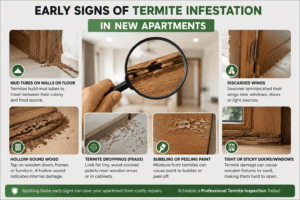
Early detection remains one of the most effective ways to prevent severe termite damage.
Watch for the following warning signs:
Flying Termites
Flying termites are reproductive termites that emerge during humid weather conditions.
Their appearance may indicate:
- A nearby termite colony.
- Hidden termite activity.
- New colony formation.
Discarded Wings
Flying termites shed their wings after swarming.
You may find termite wings near:
- Windows
- Balcony doors
- Kitchen cabinets
- Utility areas
Hollow Wooden Furniture
Tap wooden surfaces gently.
Hollow sounds may indicate internal termite damage.
Mud Tubes
Mud tunnels are among the clearest signs of subterranean termite infestations.
These are commonly found near:
- Walls
- Door frames
- Wooden cabinets
- Utility spaces
Swollen or Peeling Laminates
Termites frequently damage:
- Kitchen cabinets
- Wooden wardrobes
- Decorative panels
resulting in swelling, peeling, or bubbling laminates.
Is the Builder’s Anti-Termite Treatment Enough?
One of the most common misconceptions among homebuyers is that every newly constructed apartment comes with complete termite protection. Many homeowners assume that if the builder mentions “anti-termite treatment” in the project specifications, they will never have to worry about termites again.
Unfortunately, that’s not always true.
While many reputed builders carry out pre-construction anti-termite treatment as part of the construction process, several factors determine how effective that treatment will be over time.
These include:
- Quality of chemicals used
- Soil conditions around the property
- Construction practices
- Water seepage issues
- Structural modifications after possession
- Maintenance practices
Anti-termite treatment is highly effective when properly performed, but it should not be considered a lifetime guarantee against termite infestations.
Even luxury apartment projects in cities like Bangalore, Mumbai, Pune, Hyderabad, and Chennai have reported termite issues despite undergoing anti-termite treatment during construction.
As a homeowner, it’s always advisable to inspect your apartment thoroughly rather than assuming termite protection is permanent.
Questions You Should Ask Your Builder
Before taking possession of your apartment, ask your builder the following questions:
- Was pre-construction anti-termite treatment carried out?
- Which treatment method was used?
- Does the project provide any termite warranty?
- Have all wooden structures been termite protected?
- Is there documentation available for the anti-termite treatment?
Understanding the treatment history of your property can help you make informed decisions about future termite prevention measures.
Termites in Modular Kitchens of New Apartments
Modular kitchens are among the most common locations where termites are first discovered in newly constructed homes.
Modern modular kitchens contain:
- Plywood cabinets
- Wooden storage units
- Laminated wooden surfaces
- Decorative panels
- Wooden partitions
Combined with moisture and concealed spaces, these materials create ideal conditions for termite activity.
Common Areas Termites Attack
In modular kitchens, termites frequently target:
- Sink cabinets
- Corner units
- Pantry storage cabinets
- Wall-mounted cabinets
- Wooden skirting
- Utility storage compartments
One of the primary reasons termites thrive in kitchen cabinets is moisture.
Small plumbing leaks beneath sink cabinets often go unnoticed for several weeks or months, creating an ideal environment for termite colonies.
Homeowners moving into newly constructed apartments should inspect their modular kitchens carefully before assuming everything is termite-free.
Termites in Wooden Wardrobes
Built-in wardrobes are another major hotspot for termite infestations.
Premium apartments across India frequently include custom-designed wardrobes made using:
- Plywood
- MDF boards
- Particle boards
- Wooden laminates
Termites can silently feed on these materials while leaving the outer laminate untouched.
Signs of termite infestation in wardrobes include:
- Hollow wooden sounds
- Peeling laminates
- Swollen surfaces
- Mud deposits
- Tiny holes
- Discarded termite wings
Many homeowners first discover termite problems only after opening their wardrobes and noticing damage inside.
Regular termite inspections are particularly important if your apartment includes extensive wooden interiors.
How to Inspect a New Apartment for Termites Before Moving In
Conducting a termite inspection before moving into your apartment can save significant repair costs in the future.
Inspect Wooden Structures Carefully
Check:
- Kitchen cabinets
- Wardrobes
- Wooden doors
- Storage units
- False ceilings
Look for:
- Cracks
- Tiny holes
- Swollen laminates
- Hollow sounds
Check Under Sink Cabinets
The area beneath kitchen sinks is one of the most overlooked locations during home inspections.
Inspect for:
- Dampness
- Water leakage
- Mud deposits
- Wood damage
Even newly installed cabinetry can become vulnerable if moisture issues are present.
Examine Window Frames and Door Frames
Termites frequently infest:
- Wooden window frames
- Main doors
- Bedroom doors
- Balcony door frames
Check for:
- Soft wood
- Bubbling paint
- Hollow sounds
- Mud tunnels
Look for Flying Termites
Flying termites are often seen during India’s monsoon season.
They may gather around:
- Balcony lights
- Windows
- Living room lighting
- Kitchen ventilators
Flying termites can indicate a mature termite colony nearby and should never be ignored.
Inspect Utility Areas
Utility spaces frequently experience:
- Moisture accumulation
- Poor ventilation
- Plumbing access points
These areas provide ideal conditions for termite survival.
Common Mistakes Homeowners Make
Unfortunately, many termite infestations worsen because homeowners fail to recognise early warning signs.
Some common mistakes include:
Assuming New Homes Are Termite-Free
This is by far the most common misconception.
New apartments are not immune to termite infestations.
Ignoring Moisture Problems
Minor plumbing leaks often become major termite problems when left unresolved.
Delaying Professional Inspections
Homeowners frequently postpone termite inspections because visible damage appears insignificant during the early stages.
Unfortunately, termites continue feeding silently behind walls and inside furniture.
Using DIY Treatments for Major Infestations
Many homeowners attempt to eliminate termites using:
- Vinegar sprays
- Boric acid
- Salt water
- DIY termite sprays
While these methods may kill visible termites temporarily, they rarely eliminate termite colonies hidden within the property.
DIY Tips to Prevent Termites in New Homes
Although professional termite treatment remains the most effective solution, homeowners can significantly reduce infestation risks by following preventive measures.
Maintain Proper Ventilation
Ensure adequate ventilation in:
- Kitchens
- Bathrooms
- Utility areas
Reducing humidity levels makes the environment less favourable for termites.
Fix Water Leakage Immediately
Regularly inspect:
- Sink pipes
- Bathroom fittings
- RO systems
- Plumbing connections
Moisture control plays a critical role in termite prevention.
Schedule Annual Inspections
Annual termite inspections can identify termite activity before serious damage occurs.
This is particularly important for apartments with:
- Wooden interiors
- Modular kitchens
- Custom wardrobes
- False ceilings
Keep Wooden Structures Dry
Avoid prolonged moisture exposure in:
- Kitchen cabinets
- Storage units
- Wooden furniture
Dry wooden structures are less attractive to termites.
Why Early Detection Matters
Termites do not become destructive overnight. Most infestations develop gradually over several months or years.
Early termite detection offers several benefits:
- Reduced treatment costs.
- Less structural damage.
- Improved property protection.
- Easier colony elimination.
- Lower maintenance expenses.
Professional termite inspections remain one of the smartest investments homeowners can make after purchasing a new apartment.
Professional Termite Treatment Options for New Apartments in India
If you’ve discovered termites in your newly purchased apartment, acting early can save you thousands of rupees in repair and replacement costs. Professional termite treatment is the most effective solution for eliminating termite colonies and preventing future infestations.
Modern termite control methods are designed to provide long-term protection for:
- Apartments
- Independent homes
- Villas
- Builder floors
- Luxury residences
- Commercial properties
Whether you’re living in Bangalore, Mumbai, Pune, Hyderabad, Chennai, Delhi NCR, or any other Indian city, termite infestations should always be addressed professionally once confirmed.
Best Termite Treatment Methods for New Homes
Professional termite control specialists typically recommend treatment based on:
- Property size
- Severity of infestation
- Construction type
- Termite species involved
- Areas affected
The most commonly used termite treatment methods include:
1. Pre-Construction Anti-Termite Treatment
This treatment is carried out before construction begins and is one of the most effective termite prevention methods available.
Benefits include:
- Protection against subterranean termites.
- Long-term termite resistance.
- Enhanced structural protection.
- Reduced future treatment costs.
Homebuyers purchasing under-construction properties should ask builders whether pre-construction anti-termite treatment has been performed.
2. Post-Construction Termite Treatment
Post-construction termite treatment is ideal for:
- Newly purchased apartments
- Existing homes
- Luxury flats
- Villas
- Commercial spaces
This treatment is particularly useful if termites are discovered after possession.
Professional treatment methods may include:
- Chemical barrier treatments
- Drill and injection methods
- Soil treatment
- Wood treatment
- Wall treatment
Post-construction termite treatment remains one of the most effective solutions for termite infestations in residential properties.
3. Wood Treatment for New Apartments
Wood treatment provides additional protection for valuable wooden interiors such as:
- Modular kitchens
- Wardrobes
- Wooden flooring
- Storage units
- Decorative wall panels
- Wooden furniture
This treatment helps increase the lifespan of wooden structures while reducing termite risks.
How Long Does Anti-Termite Treatment Last?
One of the most frequently asked questions by homeowners is:
“Will termite treatment last forever?”
The answer is:
No termite treatment lasts forever.
The longevity of termite treatment depends on several factors, including:
- Treatment quality
- Soil conditions
- Construction practices
- Moisture levels
- Maintenance practices
Properly executed termite treatments can provide long-lasting protection, especially when combined with regular inspections and preventive maintenance.
Annual termite inspections are highly recommended for homes with extensive wooden interiors.
Is Professional Termite Treatment Worth It?
Absolutely.
Many homeowners hesitate to invest in termite treatment until visible damage becomes severe. Unfortunately, delaying treatment almost always results in significantly higher repair costs.
Professional termite treatment offers several advantages:
- Early termite colony elimination.
- Long-term protection.
- Reduced repair expenses.
- Improved property value.
- Better protection for wooden interiors.
- Professional inspection and monitoring.
Considering the cost of replacing modular kitchens and wardrobes, termite treatment is often a relatively small investment that provides substantial long-term benefits.
How to Prevent Termites in New Apartments
Termite prevention begins immediately after moving into your new home.
Maintain a Dry Environment
Termites thrive in moist environments.
Ensure:
- Kitchen cabinets remain dry.
- Plumbing systems are leak-free.
- Utility areas are properly ventilated.
- Water seepage issues are addressed immediately.
Inspect Wooden Interiors Regularly
Perform routine inspections of:
- Kitchen cabinets
- Wardrobes
- Wooden doors
- Furniture
- Window frames
- False ceilings
Early termite detection significantly reduces treatment costs.
Schedule Annual Professional Inspections
Professional termite inspections are recommended at least once a year for homes containing:
- Modular kitchens
- Wooden furniture
- Wooden flooring
- Built-in storage systems
Preventive inspections remain one of the most cost-effective termite protection measures.
Avoid Ignoring Flying Termites
Flying termites are often the first visible warning sign of termite activity.
If you notice:
- Flying termites
- Discarded termite wings
- Mud tubes
- Hollow wooden surfaces
do not delay professional inspection.
Are Termites More Common During Monsoon?
Yes.
The monsoon season significantly increases termite activity across India.
Homeowners in cities such as:
- Bangalore
- Mumbai
- Pune
- Hyderabad
- Chennai
- Delhi NCR
frequently report termite swarms during humid weather conditions.
Monsoon-related factors that attract termites include:
- Increased humidity.
- Moist soil conditions.
- Water seepage issues.
- Enhanced termite breeding activity.
Performing termite inspections before and after the monsoon season is highly recommended.
Frequently Asked Questions (FAQs)
1. Can termites infest brand-new apartments?
Yes. Newly constructed apartments can develop termite infestations if proper anti-termite treatment and preventive measures are not implemented.
2. Do builders always provide anti-termite treatment?
Not necessarily. Homebuyers should confirm with builders whether anti-termite treatment was performed and request documentation whenever possible.
3. Are termites common in Indian metro cities?
Yes. Cities such as Bangalore, Mumbai, Pune, Hyderabad, Chennai, and Delhi NCR frequently report termite infestations due to rapid urban construction and humid weather conditions.
4. Can termites damage modular kitchens in new apartments?
Absolutely. Modular kitchens are among the most common locations affected by termite infestations.
5. How do termites enter apartments?
Termites may enter through:
- Foundation gaps
- Plumbing lines
- Utility shafts
- Wall openings
- Adjacent units
6. What are the first signs of termite infestation?
Common warning signs include:
- Flying termites
- Mud tubes
- Hollow wooden surfaces
- Peeling laminates
- Discarded wings
7. Is termite treatment safe for apartments?
Yes. Professional termite treatments are generally safe when performed by experienced pest control specialists.
8. How often should termite inspections be conducted?
Annual inspections are recommended for most residential properties.
9. Can termites return after treatment?
Termites may return if preventive maintenance is neglected. Regular inspections significantly reduce this risk.
10. Is termite treatment expensive?
The cost of termite treatment varies depending on:
- Property size
- Treatment type
- Severity of infestation
However, termite treatment is usually far more affordable than replacing damaged interiors and furniture.
Conclusion
Purchasing a new apartment is a major investment, and protecting it should be a top priority. While many homeowners assume termite infestations only affect older homes, the reality is that newly constructed apartments are equally vulnerable if proper termite prevention measures are not in place.
From modular kitchens and wooden wardrobes to door frames and decorative interiors, termites can silently cause extensive damage before visible symptoms appear. Rapid urban construction, moisture issues, and concealed wooden structures make modern homes particularly susceptible to termite infestations across India.
Whether you’re moving into a new apartment in Bangalore, Mumbai, Pune, Hyderabad, Chennai, or any other Indian city, early termite inspections and preventive treatments can save you significant repair costs in the future.
Remember, termites don’t wait for a home to become old—they only need suitable conditions to thrive. Regular inspections, moisture control, and professional termite treatment remain the most effective ways to protect your property and preserve its value for years to come.