
The Essentials of Pre-Construction Termite Treatment in Bengaluru
Understanding the Threat: Subterranean vs. Drywood Termites
Pre-construction termite treatment essentials in Bengaluru hinge on effectively distinguishing between subterranean and drywood termites to implement strategic protection methods. Subterranean termites, notably the Coptotermes and Reticulitermes genera, pose the most significant threat due to their affinity for moist environments and propensity to form extensive underground colonies. Implementing a comprehensive pre-construction soil barrier system is paramount in preventing these pests from establishing colonies beneath the foundations.
Subterranean Termites:
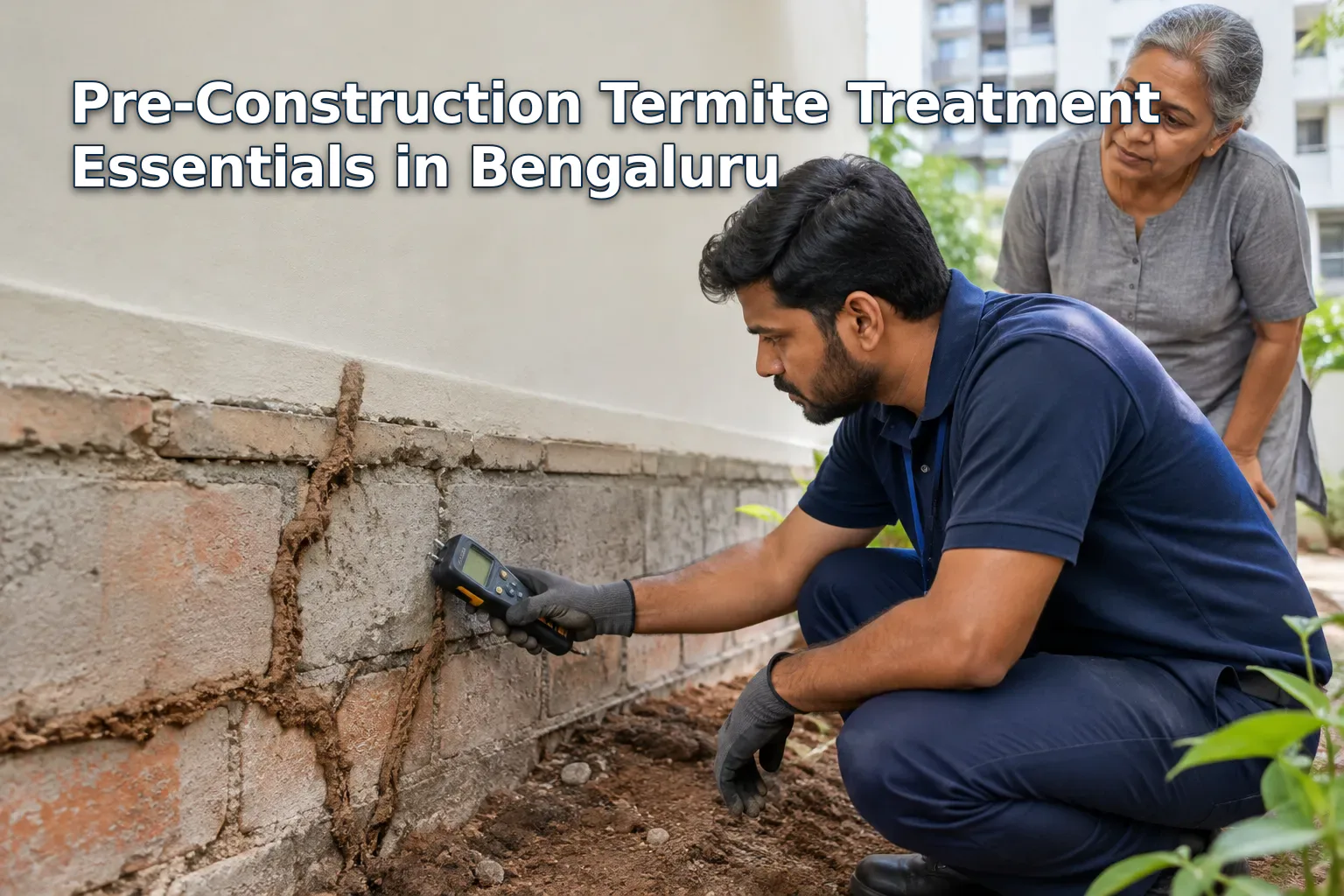
- Habitat: Prefer moist soil and build mud tubes to access wood above ground.
- Detection: Look for shelter tubes along walls or foundations; they require direct contact with soil moisture.
- Treatment Strategy: Prioritize odorless pre-construction soil barrier methods that involve trenching and treating the soil with non-repellent termiticides before laying the foundation.
Drywood Termites:
- Habitat: Infest dry wood sections, do not need soil contact, and live within the wood they consume.
- Detection: Presence is often indicated by frass (wood-colored droppings) and hollow-sounding wood.
- Approach: Not targeted by soil barriers; focus on maintaining wood dryness and minimizing exposed entry points.
In Bengaluru, pre-construction termite treatment strategies effectively combat subterranean infestations by integrating these elements:
- Soil Barrier Preparation: Pre-installation of effective odorless termiticides in the soil surrounding foundational areas to prevent termites from breaching the premises.
- Plinth Protection: An additional critical layer involving the application of termiticides beneath the plinth level to fortify structures against invasion.
- Cost Considerations: While the initial investment in odorless termite barriers may vary, it's a prudent move to ensure long-term protection, minimizing repair and infestation remediation expenses.
Adhering to these practices ensures that properties remain safeguarded against termites, securing the long-term value and integrity of structures in Bengaluru. Early adoption and meticulous implementation of such treatments safeguard against future infestations, enhancing structural longevity and peace of mind.
Implementing Odorless Soil Barrier Methods for Protection
To ensure optimal pre-construction termite treatment essentials in Bengaluru, integrate advanced odorless soil barrier methods from the blueprint stage. This preemptive step is vital to safeguarding foundations against the invasive subterranean termite species common in the region, notably Coptotermes and Reticulitermes, who establish colonies underground and often go undetected until significant damage is already underway.
Key Components of Odorless Soil Barrier Methods:
- Comprehensive Site Evaluation:
- Assess the soil's moisture characteristics to determine the necessity for drainage improvements, as subterranean termites thrive in damp environments.
- Identify potential entry points such as construction joints or conduit penetrations for targeted treatment application.
- Odorless Non-Repellent Termiticide Application:
- Uniformly apply advanced micro-encapsulated odorless formulations to create a continuous underground barrier.
- Focus on areas prone to termite intrusion like the perimeter of the building and beneath planned structural footprints.
- Collaborative Coordination:
- Work closely with civil engineers and architects to incorporate termite barrier systems seamlessly into the construction timeline.
- Schedule treatment application pre-slab and around foundational elements to enhance effectiveness.
- Regulatory Compliance and Specifications:
- Adhere strictly to local environmental guidelines and construction codes governing the use of termiticides, ensuring safety and efficacy.
- Document every step for future maintenance and inspections.
Checklist for Effective Pre-Construction Treatment:
- [ ] Conduct thorough site soil and moisture assessment.
- [ ] Implement drainage solutions if necessary.
- [ ] Apply micro-encapsulated odorless termiticide to foundational areas and construction joints.
- [ ] Coordinate with construction teams to align treatment with building phases.
- [ ] Ensure documentation and compliance with Bengaluru’s regulatory standards.
Price considerations will vary based on site-specific factors such as property size, soil condition, and the complexity of building designs. The value of early termite protection in maintaining property integrity and reducing long-term repair costs is paramount. Emphasizing a proactive approach, such as plinth protection with odorless techniques, not only fortifies the structure but also enhances property value in Bengaluru.
Fundamentals of Termite Plinth Protection Practices
Pre-construction termite treatment is an essential safeguard for new buildings in Bengaluru, ensuring long-term protection against infestations. Implementing a termite soil barrier during the construction phase not only deters subterranean termites but also preserves property value and structural integrity. Here’s a practical guide on executing effective termite plinth protection in Bengaluru.
- Understanding Termite Soil Barriers:
- Composition: Odorless, non-repellent termiticides are micro-encapsulated to create an effective barrier.
- Application: The treatment is applied to the soil before the foundation and slab are laid, covering all crucial points such as footings, junctions, and pipe penetrations.
- Inspection Points: Ensure thorough inspection for mud tubes, excessive moisture, and potential entry points that termites can exploit.
- Key Advantages:
- Durability: Once established, a termite barrier offers a long-lasting defense, reducing ongoing treatment needs.
- Odorless: Advanced formulations ensure no detection or disruption, crucial for ongoing construction activities.
- Prevention: By intercepting termites at the soil level, future infestations are significantly minimized.
- Implementation Steps:
- Site Assessment: Conduct a comprehensive survey of the prospective construction area for risk evaluation.
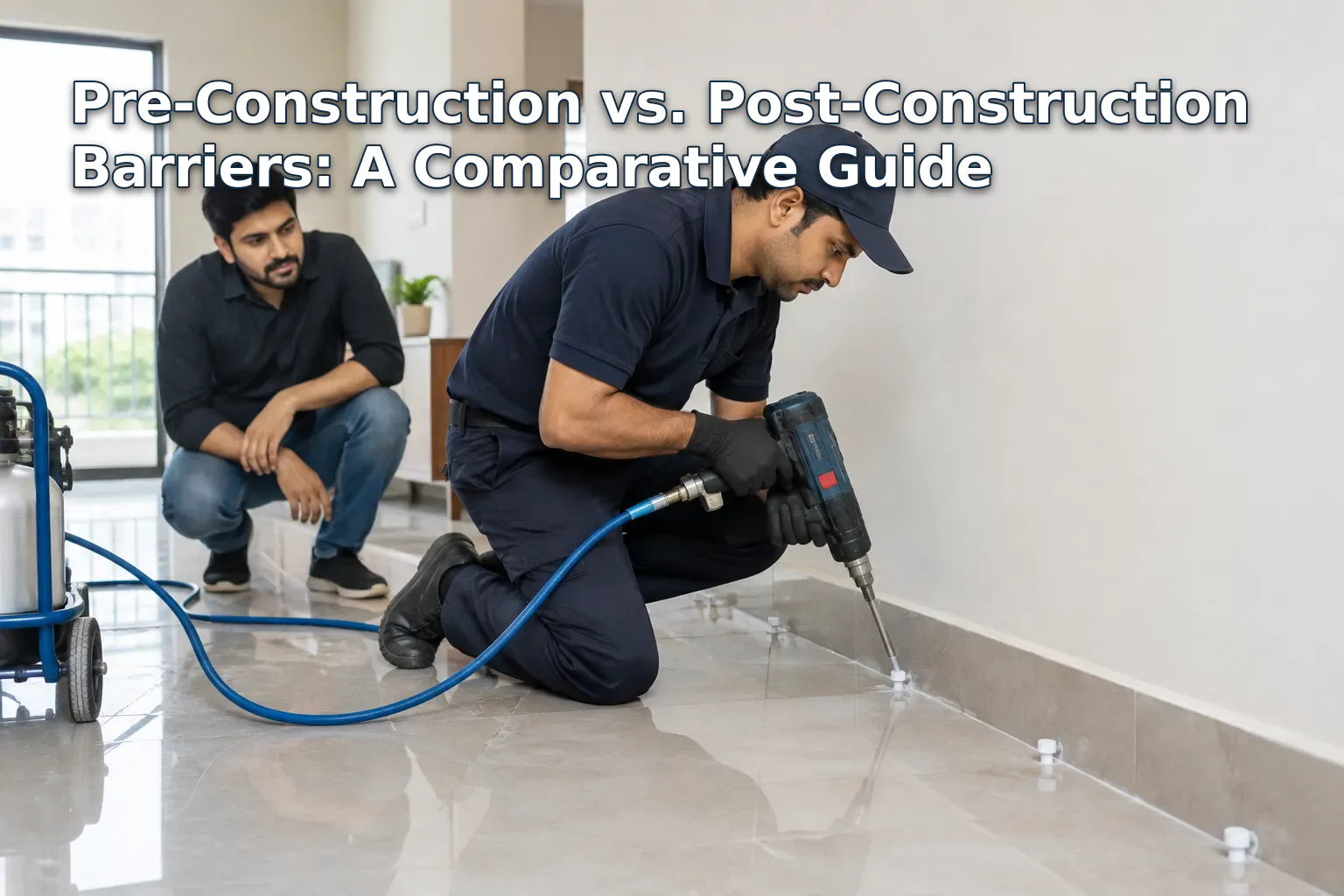
- Barrier Installation: Employ drill-and-inject methods for uniform distribution of the termiticide.
- Compliance: Adhere to Bengaluru's construction norms and guidelines for pest control measures.
- Additional Checklist for Builders:
- Verify if all contractors are familiar with local requirements for pre-construction termite treatment in Bengaluru.
- Confirm equipment and procedures adhere to the exclusive use of odorless treatments.
- Document each stage of barrier application for future reference and compliance checks.
While costs can vary based on site size, complexity, and soil conditions, integrating these termite protection measures during pre-construction not only enhances structural longevity but also offers a cost-effective solution compared to post-construction interventions.
Pre-Construction vs. Post-Construction Barriers: A Comparative Guide
When it comes to safeguarding properties against termites, opting for pre-construction termite treatment in Bengaluru is paramount. Early intervention with odorless soil barriers can protect your future home from the pervasive risks posed by subterranean termites. Here's how pre-construction measures compare and complement post-construction interventions.
Pre-Construction Termite Treatment Essentials in Bengaluru:
- Timing and Execution:
- Soil Preparation: Prior to laying the foundation, the Bengaluru termite soil barrier is applied to disrupt termite access from the ground.
- Plinth Protection: Involves treating the soil around the building perimeter and beneath the plinth area to prevent termites from entering through gaps in the plinth.
- Barrier Methods:
- Odorless Soil Barriers: Utilize advanced micro-encapsulated termiticides forming an unyielding odorless barrier against termites without affecting indoor air quality.
- Integration with Foundations: Pre-construction treatment integrates with construction blueprints to form continuous protection in conjunction with structural design.
- Longevity and Maintenance:
- Durable Shield: Offers an extended shield against termites that is inspected annually for integrity.
- Early Investment: Long-term savings on potential costly repairs by addressing termite risks from inception.
Pre-Construction vs Post-Construction Barriers:
| Aspect | Pre-Construction | Post-Construction |
|---|---|---|
| Application Timing | Before beginning construction | After building completion |
| Primary Method | Odorless soil and plinth treatments | Odorless drill-and-inject barriers |
| Cost Implication | Lower cost due to fewer required treatments | Potentially higher as it involves treating an existing structure |
| Disruption | No disruption to occupants | Requires temporary access to property |
To ensure cost-effectiveness and enduring strength, integrate termite management early, ideally with pre-construction termite treatment in Bengaluru. This foresight not only enhances property resilience but also maintains the integrity of structural investments. Consider consulting expert services for custom evaluation and execution, ensuring your property’s value and foundation are preserved for years to come.
Understanding the Cost of Termite Treatment in Bengaluru
Pre-construction termite treatment in Bengaluru involves safeguarding your future structure from destructive subterranean termites. Start with understanding that the initial investment in termite soil barrier solutions will save significantly on future repairs and preservation of structural integrity. Compared to costly renovations, preventative measures are indispensable.
Actionable Checklist for Pre-Construction Termite Treatment:
- Site Assessment: Engage a professional to evaluate the site conditions. Consider soil type, moisture levels, and potential termite entry points.
- Soil Treatment: Apply an advanced odorless termiticide to the soil before laying the foundation. This decision is crucial for creating an effective barrier against subterranean termites.
- Odorless Drill-and-Inject Protocols: For optimal plinth protection in Bengaluru, ensure that these odorless treatments are integrated at every stage of construction—foundation, walls, and surrounding areas.
- Moisture Control: Proper drainage systems should be installed to minimize moisture accumulation, which attracts termites.
- Monitoring: Implement a permanent monitoring and maintenance regime post-construction to ensure the effectiveness of treatments and adapt to environmental changes.
Comparison between Pre-Construction and Post-Construction Termite Barriers:
| Feature | Pre-Construction | Post-Construction |
|---|---|---|
| Timing | Before construction begins | After construction is completed |
| Barrier Implementation Method | Soil treatment before laying foundation | Drill-and-inject treatment in existing masonry |
| Cost Implication | Generally lower when part of initial plans | Potentially higher due to structural adjustments |
| Overall Protection Efficacy | Ensures comprehensive coverage from start | Offers sectional protection, requires thorough inspection |
Understanding the cost implications involves acknowledging that while pre-construction treatments in Bengaluru might seem upfront, they are superior in longevity and efficacy. Engage a trained pest professional who uses only 100% odorless treatments to construct formidable termite barriers.
Safeguarding your property from termites is not merely about treatment costs, but about ensuring long-term structural health. Protect your Bengaluru investment with standardized termite plinth protection and advanced odorless treatment methodologies, designed to offer peace of mind and preserve value.
Frequently Asked Questions
What is the difference between subterranean and drywood termites?
Subterranean termites require moist soil to survive and often build mud tubes to access wood structures, whereas drywood termites infest dry wood and do not need soil contact, living entirely within the wood they consume.
How do pre-construction termite treatments protect homes in Bengaluru?
Pre-construction termite treatments in Bengaluru involve applying non-repellent termiticides to the soil before foundation laying, creating an effective chemical barrier that prevents termite infestations from occurring from the ground up.
What are odorless soil barrier methods?
Odorless soil barrier methods utilize non-repellent termiticides that are applied to the soil around a building site. These chemicals are designed to be undetectable to termites, ensuring they are effective in eradicating the pests upon contact.
Why are pre-construction treatments preferred over post-construction options?
Pre-construction treatments are preferred because they allow for a more comprehensive and effective barrier to be established before termites can infest a structure, whereas post-construction options often require more invasive measures to treat established colonies.
Related Guides
- Effective Termite Control Strategies for Alibaug Properties
- Complete Guide: Pre-Construction vs Post-Construction Anti-Termite Treatment
- Odorless Termite Control Strategies for Mumbai's Residential Pre-Construction Projects
- Odorless Termite Barrier Strategies in Noida
- Protective Strategies for Wood Against Subterranean Termites in Mumbai