
Complete Guide: Pre-Construction vs Post-Construction Anti-Termite Treatment
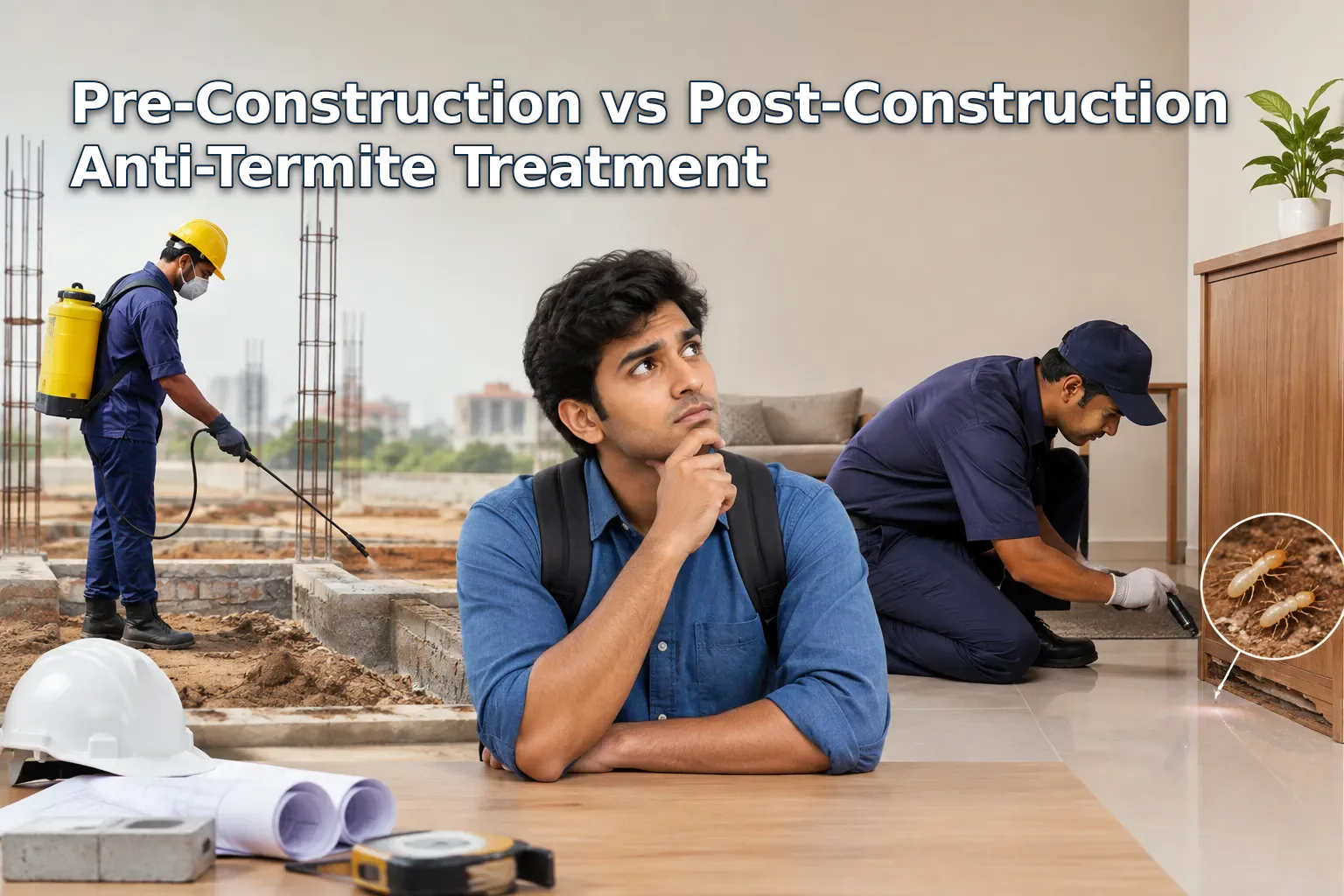
Understanding Pre-Construction Anti-Termite Treatment Protocols
Properly safeguarded against termite infestations, a property’s long-term structural integrity and value can be significantly preserved. In the realm of pre-construction versus post-construction anti-termite treatment, choosing the correct protocol and application is paramount to avert potential infestations. Pre-construction anti-termite treatments address termite prevention at the foundational stage, offering a potent first line of defense before termites even have a chance to invade.
Advantages of Pre-Construction Anti-Termite Treatment:
- Foundation Protection: Soil treatment is notably more effective before the placement of the foundation. An odorless anti-termite barrier, applied prior to construction, is the most comprehensive defense against subterranean termites.
- Long-Term Safety: By establishing invisible, odorless barriers during the construction phase, this method effectively prevents termite colonies from accessing structural timber.
- Cost Efficiency: Implementing protective measures during construction can be more cost-effective than post-building remediation, which often involves intensive structural work and disruption.
Detailed Pre-Construction Protocols:
- Soil Preparation:
- The foundational soil receives an application of advanced odorless anti-termite formulations.
- It forms a continuous barrier excluding termites from penetrating future structures.
- Barrier Integrity:
- Ensure the treatment covers the entire surface upon which foundations will rest.
- Pay special attention to joints, penetrations, and edges where termites may find entry points.
- Verification and Monitoring:
- Regular inspections and re-application as necessary uphold barrier efficacy.
- Engage certified pest management professionals for treatment application to ensure compliance with safety standards and efficacy benchmarks.
Comparison with Post-Construction Solutions:
| Aspect | Pre-Construction | Post-Construction |
|---|---|---|
| Application Timing | Before construction | After construction |
| Structural Disruption | Minimal | Potentially Significant |
| Initial Cost | Lower | Variable, Often Higher |
| Future Maintenance | Routine inspections | May require repairs and continuous monitoring |
In conclusion, while pre-construction anti-termite treatments lay a robust groundwork for termite prevention, aligning structural plans with pest management strategies provides optimal protection. Through thoughtful planning in this phase, architects and builders can avert costly repairs and ensure property longevity.
Key Steps in Post-Construction Odorless Anti-Termite Solutions
Choosing the right anti-termite treatment approach between pre-construction and post-construction stages significantly impacts the long-term protection of your property in termite-prone cities like Bengaluru, Goa, Delhi, Pune, Noida, and Mumbai. In post-construction settings, employing odorless treatments offers seamless integration into existing structures without the intrusive impact typical of traditional chemicals.
Key Steps in Post-Construction Odorless Anti-Termite Solutions
- Initial Inspection: Begin with a thorough inspection to identify active termite infestations and assess the extent of the affected areas. This involves checking for mud tubes, wood damage, and moisture buildup along the foundation and in wooden structures.
- Identification of Entry Points: Pinpoint the termites’ entry points. Focus on cracks in concrete slabs, via utility passageways, and around plumbing infrastructures that may act as conduits for subterranean termites.
- Drill-and-Inject Treatment: Utilize advanced odorless drill-and-inject barrier protocols. Small, discreet holes are drilled near identified points and along the perimeter, injecting an odorless, micro-encapsulated termiticide. This non-repellent treatment ensures that termites come into contact with the barrier unknowingly, carrying the substance back to the colony.
- Perimeter Soil Barriers: Augment barriers by treating the soil surrounding the structure with odorless termiticides, protecting against future infestations. This step is crucial given the termites' dependency on moisture-rich environments.
- Interior Safety Implementation: For sensitive installations such as modular kitchens and hardwood flooring, ensure that treatment is discreet and won’t alter appearance or functionality. Odorless formulations are pivotal in such environments.
- Regular Monitoring: Post-treatment, establish a regular monitoring schedule to ensure effectiveness and catch any early signs of re-infestation. This involves periodic inspections of woodwork and foundation areas.
By opting for advanced odorless anti-termite solutions in the post-construction phase, you maintain structural integrity without the inconvenience and potential harm of traditional odorless treatments.
Comparison: Pre-Construction vs Post-Construction in Bengaluru Architecture
For architects and property developers in Bengaluru, understanding the nuances between pre-construction and post-construction anti-termite treatment is imperative to protect structural integrity and preserve investment value. Here is a detailed comparison to guide your project planning and execution in the city's diverse architectural scenarios.
Pre-Construction Anti-Termite Treatment:
- Advantages:
- Establishes a robust protective barrier beneath the structure.
- Odorless soil treatments act as a deterrent well before potential infestations.
- More cost-effective when integrated into the building plan.
- Contributes to long-term structural reinforcements.
- Methods:
- Odorless soil treatment applied prior to foundation laying, with a focus on micro-encapsulated termiticides.
- Barrier creation focuses on foundational peripheries to form a continuous deterrent.
Post-Construction Anti-Termite Treatment:
- Advantages:
- Targets existing structures that may have been initially overlooked for termite protection.
- Effective for urban renovations and older properties encountering emerging termite threats.
- Utilizes advanced odorless drill-and-inject methods to minimize disruption.
- Methods:
- Strategic holes drilled into masonry at critical junctions.
- Odorless formulations injected to create a non-repellent barrier.
- Regular monitoring and maintenance bolster ongoing protection.
Choosing the Right Approach:
- If integrating termite defenses in new projects, prioritize pre-construction treatments to embed protection from the start.
- For established Bengaluru residences or delays in initial soil treatments, opt for post-construction protocols to realign defensive measures effectively.
Considering the fluctuating climate and soil types in Bengaluru, these odorless anti-termite strategies, both pre- and post-construction, are essential in safeguarding woodwork, kitchens, and foundations against subterranean threats. By selecting the appropriate solution for your specific needs, you ensure both immediate defense and long-term resilience against termites.
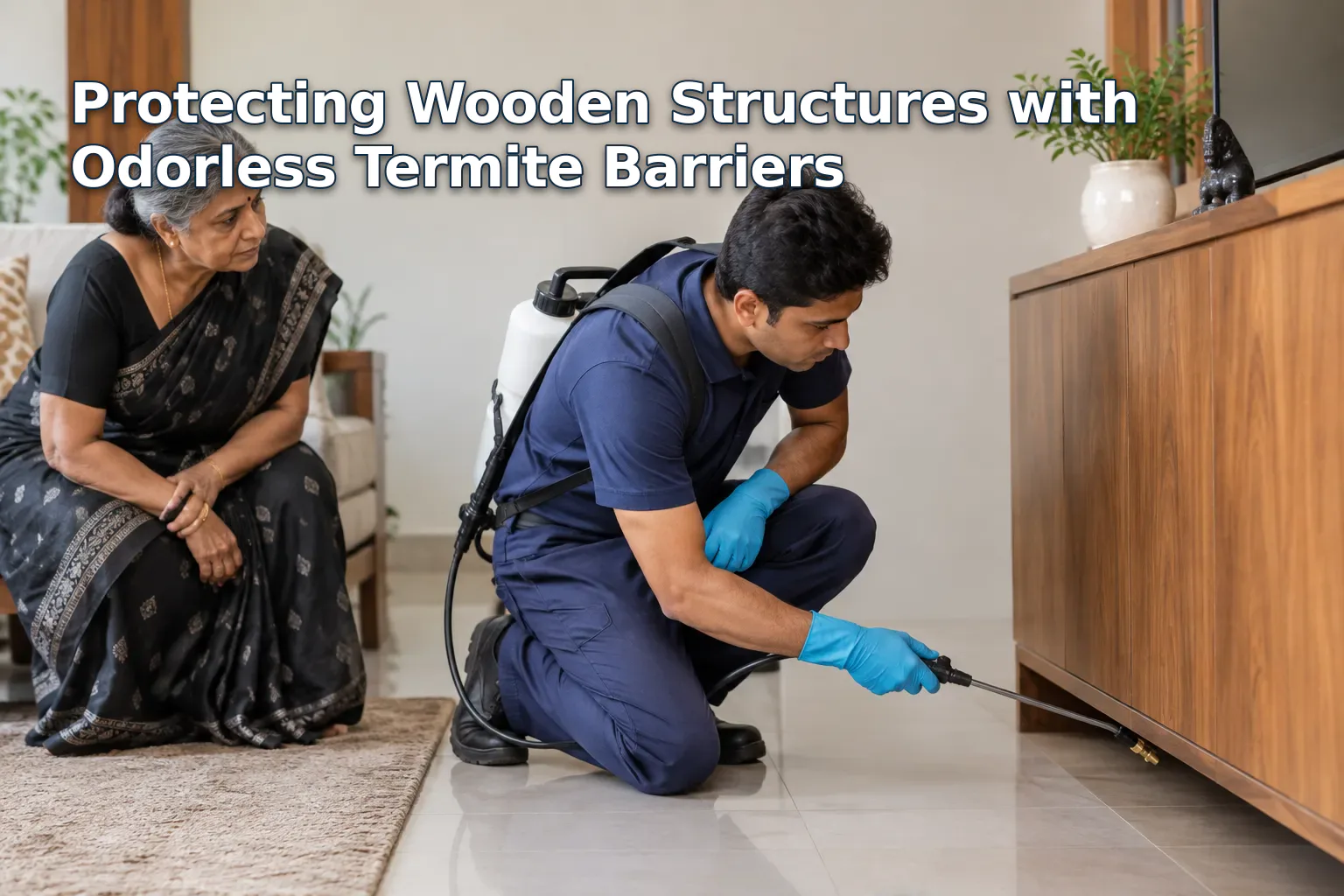
Protecting Wooden Structures with Odorless Termite Barriers
Choosing the appropriate termite treatment method depends on whether the building is under construction or already established. For pre-construction scenarios, incorporate advanced odorless anti-termite barriers during the foundational stages, ensuring long-lasting protection anchored in Integrated Pest Management (IPM) principles. These involve soil treatment strategies that safeguard against subterranean termites known for targeting foundational wood structures.
Pre-Construction Anti-Termite Treatment:
- Soil Pretreatment: Prior to laying the foundation, apply an odorless, non-repellent termiticide to the soil.
- Barrier Establishment: Implement odorless anti-termite barrier around potential termite entry points, including the building's perimeter.
- Moisture Management: Ensure effective drainage to maintain soil dryness, deterring termite attraction.
Post-Construction Anti-Termite Treatment:
- Drill-and-Inject Barrier Protocols: For existing structures, professional services will drill targeted points within masonry to inject advanced odorless formulations, forming a protective barrier against termite invasions.
- Regular Inspections: Conduct periodic home inspections to identify early signs of termite infestation, such as mud tubes or unexplained wood damage.
- Moisture Control: Address any leaks or sources of moisture, as these attract termites and compromise the efficacy of treatments.
Key Considerations:
- Wood-Sensitive Areas: Focus on defending high-risk zones like kitchens, door frames, and hardwood flooring, where termites frequently target in search of cellulose-rich materials.
- Tailored Approaches: Each structure requires a unique treatment strategy, evaluated by a professional to optimize barrier placement and efficacy.
Transitioning smoothly from pre-construction to post-construction methods, maintaining vigilance with regular check-ups ensures your building remains defended against termite threats, safeguarding its structural integrity and value with minimal disruption.
Leveraging Odorless Treatments to Preserve Property Value
Property owners in Bengaluru, Goa, Delhi, Pune, Noida, or Mumbai should strategically choose between pre-construction and post-construction anti-termite treatments to safeguard their investments. For new builds, pre-construction odorless treatments create a long-lasting subterranean barrier against termites. Deployed during the planning stage, these odorless treatments involve incorporating advanced micro-encapsulated termiticides into soil layers, preventing termites from infiltrating future structures.
The key advantages of pre-construction treatments include:
- Integrated Protection: Termiticides are applied directly to foundation soil before construction, forming a protective seal against termite intrusions.
- Longevity: Pre-emptive measures are designed to last through the early decades of the building’s lifespan, minimizing maintenance costs.
In contrast, post-construction treatments become necessary when structures are already standing. Targeting active infestations, they involve odorless drill-and-inject techniques to establish anti-termite barriers within masonry:
- Immediate Action: Allows for direct intervention, treating present termite activity with non-repellent formulas before severe damage occurs.
- Movable Assets & Woodwork: Essential for properties with valuable cabinetry, hardwood floors, and modular fixtures threatened by termite colonization.
To effectively combat termites, understanding the biological distinctions is crucial. Coptotermes and Reticulitermes subterranean termites typically require constant soil moisture and build mud tubes, which can be intercepted using these perimeter barriers. A comparison of treatment scenarios elucidates decision-making:
| Scenario | Pre-Construction | Post-Construction |
|---|---|---|
| Timing | Before building | After building |
| Foundation Integration | Yes | No |
| Application Method | Soil integration | Drill-and-inject |
| Ideal for | New buildings | Existing structures |
Ultimately, engaging a professional service to apply these odorless barriers ensures reliability and compliance with all Integrated Pest Management (IPM) protocols. Regular inspections and appropriate barrier reinforcements will preserve the property’s structural integrity and value against one of the most significant residential threats—subterranean termites.
Frequently Asked Questions
What is the main difference between pre-construction and post-construction anti-termite treatments?
Pre-construction anti-termite treatment is applied during the building process to prevent termites from accessing the structure from the beginning. In contrast, post-construction treatment involves applying protective measures to existing buildings to eliminate or manage termite infestations.
Why is pre-construction anti-termite treatment recommended?
Pre-construction treatment is recommended because it offers a proactive approach, preventing termites from entering the building. It involves treatment of the soil before laying the foundation, which can be more effective and less costly than treating infestations after they occur.
How often should post-construction anti-termite treatments be conducted?
Post-construction anti-termite treatments typically need to be conducted every few years, depending on the product used and local termite activity. Regular inspections are crucial to ensure effectiveness and catch any early signs of termite presence.
Are odorless termite treatments effective in post-construction applications?
Yes, odorless termite treatments can be effective in post-construction settings. These treatments provide protection without the inconvenience of strong chemical smells, ensuring a safer environment for the building's occupants.